

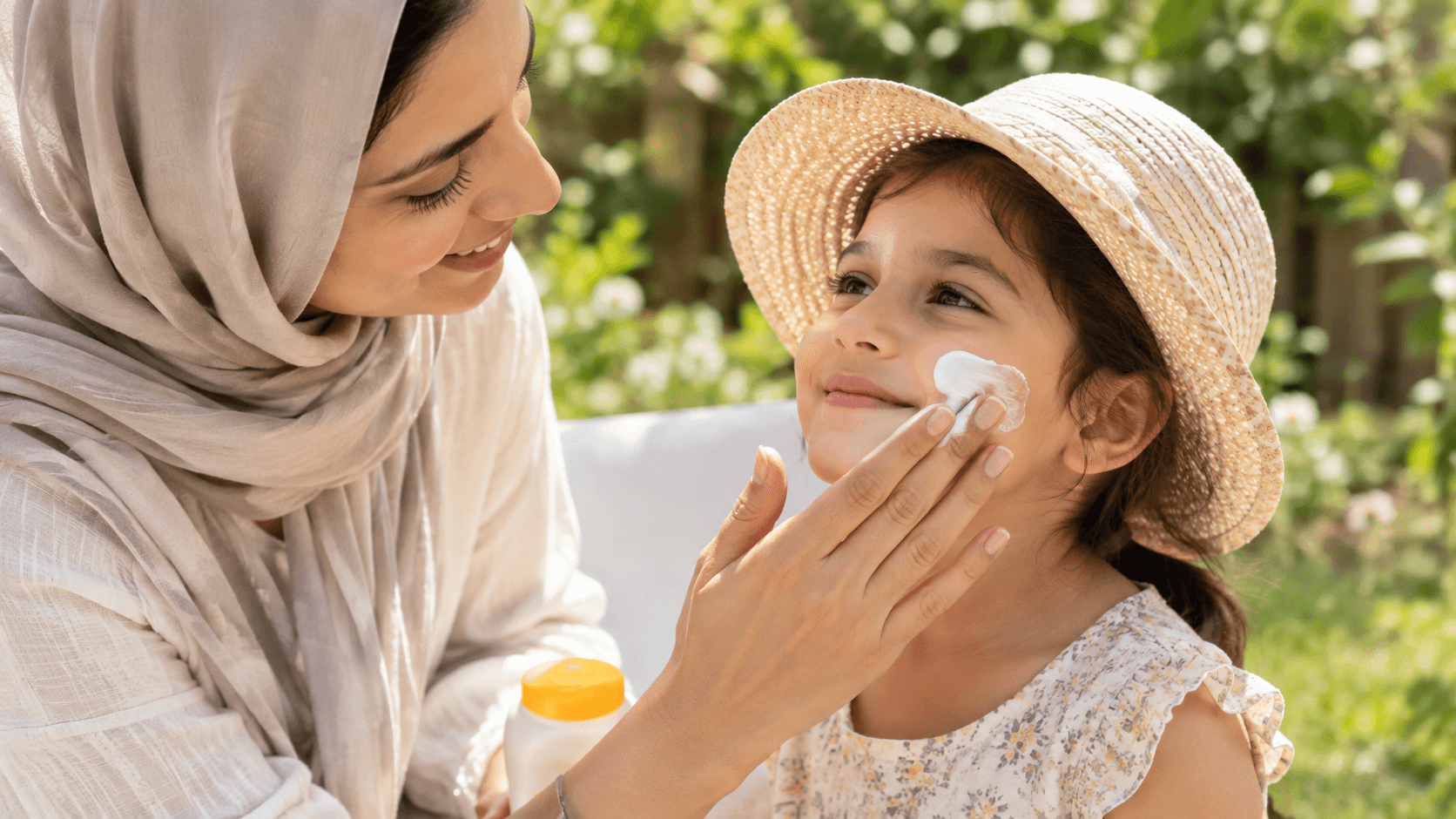
Sunscreen for sensitive skin kids is a type of sunscreen that is made with minerals like zinc oxide or titanium dioxide. It does not have fragrance, alcohol or chemical UV filters like oxybenzone. These kinds of sunscreens stay on top of the skin instead of being taken in by the skin. This means there is less chance of the skin stinging, turning red or having an allergic reaction on a child’s soft skin.
If you only remember one thing from this guide, remember this: for sensitive skin kids, the words “mineral,” “fragrance-free” and “broad-spectrum SPF 30 or higher” are the three things to look for every single time.
Now let’s actually talk about why this is important, what to avoid and how to make sun protection part of your child’s skincare routine without making every beach day a difficult moment.
Why Kids With Sensitive Skin Need Special Sunscreen Care
A child’s skin is not a smaller version of adult skin. It is thinner, has natural protection and the skin’s natural barrier is still growing. That is exactly why many parents see their child having a reaction to a sunscreen that never troubled them.
How Children’s Skin Is Different From Adult Skin
Kids’ skin loses moisture, takes in ingredients more quickly and reacts more easily to things that can irritate it. A sunscreen that is “gentle enough” for an adult can still cause a rash, dryness or breakouts on a child with eczema, keratosis pilaris or very sensitive skin.
This is the reason a full organic skincare routine for sensitive skin looks so different from a regular adult routine. Fewer steps, milder ingredients and a much bigger focus on what is not in the formula instead of what is added.
Common Sunscreen Reactions in Sensitive Skin Kids
Parents often describe a few reactions when a sunscreen does not work for their child:
- Red, itchy patches that appear within minutes after putting it on
- A burning feeling, especially near the eyes
- Small bumps or a rash-like texture
- Breakouts along the hairline or jaw after using it many times
- A white cast that does not mix in, making parents want to rub it harder, which can end up making the skin worse
If any of these sound familiar, the sunscreen’s formula, not “sensitive skin in general,” is usually the real problem.
Mineral vs Chemical Sunscreen: Which Is Safer for Sensitive Skin Kids?
This is the important decision you will make, and it is simpler than it looks once you understand what each type actually does.
How Mineral Sunscreen Works
Mineral sunscreens use zinc oxide or titanium dioxide, which sit on the top of the skin and physically block UV rays like a shield. Because they do not need to be taken in by the skin to work, they are less likely to cause irritation, burning or allergic reactions.
This is why mineral formulas are commonly recommended as a first option for children with sensitive skin, eczema or allergies.
How Chemical Sunscreen Works and Why It May Be More Irritating
Chemical sunscreens have ingredients such as oxybenzone, avobenzone or octinoxate, which absorb UV rays and turn them into heat. Some children may find these formulas more irritating, particularly if they already have sensitive skin.
Several chemical sunscreen ingredients have also been studied for their absorption into the body, which is another reason some parents prefer mineral options for children.
Quick Comparison
| Feature | Mineral Sunscreen | Chemical Sunscreen |
|---|---|---|
| How it works | Reflects or scatters UV radiation | Absorbs UV radiation |
| Sensitive skin | Often preferred | May be more irritating for some people |
| Absorption into skin | Minimal | Higher |
| Texture | Can leave a white cast | Often blends easily |
| Reef-safe | Depends on formula and local guidance | Depends on formula and local guidance |
Key Ingredients to Look For in Sunscreen for Sensitive Skin Kids
Not all mineral sunscreens are the same. The other ingredients around zinc oxide or titanium dioxide are just as important as the UV filter itself.
Zinc Oxide
Non-nano zinc oxide is commonly chosen for children’s mineral sunscreen. The particles are larger, which means they are designed to remain on the skin rather than penetrate deeply into the skin or pores.
Soothing Barrier-Supporting Ingredients
Look for sunscreens that also include calming ingredients like centella asiatica, oat extract or aloe. Niacinamide is another one to watch for. It may help calm redness while supporting the skin barrier.
If you want to know more about what it does for your child’s skin, read about niacinamide serum benefits.
Lightweight natural oils like jojoba oil are another addition some children’s formulas use for moisture. If you are not familiar with it, here is what jojoba oil actually is and why it is used in skincare.
Antioxidant Support
Sunscreen and antioxidants work together, not as replacements for each other. Antioxidants like vitamin C help fight oxidative damage from UV exposure that sunscreen alone does not fully stop.
For older kids and teens starting to build a routine, it can be useful to learn about vitamin C for skin and how it can fit into daily skincare.
Ingredients to Avoid in Sunscreen for Sensitive Skin Kids
If you look at the back of a bottle and see any of the following near the top of the ingredient list, consider choosing another formula:
- Fragrance or parfum — a common cause of skin irritation
- Alcohol denat. — can be drying for a sensitive skin barrier
- Oxybenzone and octinoxate — chemical UV filters that may cause irritation for some users
- Parabens — preservatives that some sensitive-skin users may prefer to avoid
- Essential oils in high amounts — natural does not always mean gentle, especially for young skin
A good rule of thumb is that a shorter and easier-to-understand ingredient list can make it easier to identify potential irritants for a child’s sensitive skin.
How to Choose the Right SPF for Kids
SPF 30 is a common minimum for daily protection, while SPF 50 can be useful for days outside, trips to the beach or when the sun is strong.
Beyond SPF 50, the difference in UVB protection becomes smaller. What matters more than the number is applying sunscreen properly and choosing “broad-spectrum,” which means the sunscreen protects against both UVA and UVB rays.
How to Apply Sunscreen on Sensitive Kids’ Skin
The way you apply sunscreen is just as important as the product itself.
Step 1: Start With Dry Skin
Apply sunscreen as the final step after any gentle cleanser or moisturizer, allowing other products to absorb for a minute or two first.
Step 2: Use Enough Product
Most parents use too little. Aim for a generous, even layer rather than a thin swipe.
Step 3: Do Not Miss Commonly Forgotten Areas
Ears, the back of the neck, tops of the feet and the hairline are often missed.
Step 4: Allow It to Settle
Give mineral sunscreen a little time to settle before going outside.
Step 5: Reapply Regularly
Reapply every two hours and immediately after swimming, sweating or drying off.
Step 6: Patch Test New Products
Apply a small amount to the inner arm 24 hours before using it on the face, especially for children with a history of skin reactions.
This same layering approach — gentle products followed by protection — is the base of any good skincare routine built for sensitive skin, whether it is for a child or an adult.
Sunscreen and Common Skin Issues in Kids
Sun protection is not only about avoiding sunburn today. It is also connected to some skin concerns that can appear later.
Sunscreen and Dark Spots
Not protecting the skin from the sun is one of the reasons dark spots can become more noticeable over time, especially after a scrape, bug bite or breakout has healed.
Using sunscreen consistently is one way to help reduce this risk. If your child already has some sun-related marks, it can help to learn about natural remedies for dark spots before trying anything harsh.
Sunscreen and Hyperpigmentation
The same idea applies to hyperpigmentation. Sun exposure can stimulate melanin production, which is why daily sunscreen is an important part of preventing pigmentation from becoming more noticeable.
For families dealing with existing pigmentation problems, these natural remedies for hyperpigmentation and this guide on how to reduce hyperpigmentation naturally can provide additional information.
A broader guide to hyperpigmentation treatment can also be useful for older teens and adults.
Sunscreen for Acne-Prone or Breakout-Prone Kids
Some children, pre-teens and teenagers start noticing occasional breakouts around the same time they need daily sunscreen.
The good news is that non-comedogenic mineral sunscreens are designed to reduce the likelihood of clogged pores. For teens building a complete routine, it is worth pairing sunscreen knowledge with organic skincare products for acne-prone skin along with tips on how to get rid blackheads gently instead of aggressively.
Building a Full Gentle Routine Around Sunscreen
Sunscreen works best as one step in a short, regular routine rather than as a single product applied before school.
Moisturize First
Kids with sensitive skin need hydration before sun protection, not instead of it. A lightweight, barrier-friendly moisturizer can help prevent that tight, flaky feeling by midday.
These natural moisturizers for dry skin are a good place to start if your child’s skin tends to feel tight after cleansing.
Choose Products Formulated for Sensitive Skin
Every product in a child’s cleanser, moisturizer and sunscreen routine should follow the same “less is more” philosophy.
Browsing organic skincare products for sensitive skin can make this easier than piecing together a routine from adult skincare products.
Keep the Routine Simple, Not Trendy
Multi-step routines, including many popular Korean skincare routine steps, are designed around adult skincare concerns.
Kids and pre-teens generally do better with three basic steps: cleanse, moisturize and protect. Save more advanced layering and active ingredients for later.
If you are curious about what a complete radiant-skin approach eventually looks like for teens and adults, this guide to an organic skincare routine for glowing skin is a useful reference alongside a broader look at skincare products worth having at home.
What Sunscreen Will Not Fix
Sunscreen prevents future UV damage, but it does not undo damage that is already there.
If your teenager already has concerns such as early lines, active breakouts they are treating with skincare actives or skin that needs recovery after a bad sunburn, those concerns need separate attention.
A consistent SPF habit today can help reduce the need for more intensive intervention later. This is why daily sunscreen is an important part of long-term skin protection and why repairing damaged skin can be more difficult than preventing damage in the first place.
A Note on Actives and Sun Sensitivity
If an older teen in the house is already using active ingredients such as retinol, salicylic acid or exfoliants, sunscreen becomes especially important.
For teens using retinol for sensitive skin or salicylic acid, consistent sun protection should be part of the routine.
Sunscreen Formats: Lotion, Stick or Spray?
The format you choose changes how evenly and safely sunscreen can be applied. This matters even more for sensitive skin.
Lotions and Creams
Lotion-based mineral sunscreens are generally useful for sensitive skin because they allow visible coverage, making it easier to see where you have applied the product and where you have missed.
The trade-off can be a heavier texture and an occasional white cast.
Sticks
Sunscreen sticks can be useful for targeted areas such as the face, ears and back of the neck. They are less likely to run into a child’s eyes than lotion or spray.
Many sensitive-skin mineral sunscreens are available in stick form because they can reduce mess and rubbing.
Sprays
Spray sunscreens require extra care when used around children. They can be difficult to apply evenly and may be accidentally inhaled.
If a spray is the only option available, spray it into your hands first and then apply it manually rather than spraying directly onto your child’s face.
Sun Protection Beyond the Bottle
Sunscreen is one layer of protection, not the entire strategy. Pairing it with simple habits can reduce direct sun exposure, which is especially helpful for children who react to frequent sunscreen application.
- Seek shade during periods when UV rays are strongest.
- Dress children in UPF-rated clothing for extended outdoor activities such as swimming or hiking.
- Use brimmed hats to protect the face, ears and neck.
- Keep sunglasses available for UV protection around the eyes.
- Plan outdoor play around peak sun hours when practical.
Combining these habits with sunscreen means less direct sun exposure overall, which can be especially helpful for sensitive skin.
Does Skin Tone Change Sunscreen Needs for Kids?
All children need sun protection regardless of skin tone, although the risks can differ.
Children with lighter skin may burn more quickly, while deeper skin tones can be more prone to post-inflammatory hyperpigmentation and uneven tone.
Neither group is completely protected from UV damage. Sunscreen should therefore be part of every child’s sun-protection routine.
Mistakes Parents Make With Kids’ Sunscreen
Applying Too Little
Most children receive less sunscreen than they need. Applying a generous and even layer is important for achieving the protection indicated on the label.
Skipping Days
UV exposure can still occur when the sky is cloudy, so daily sun protection can be important during outdoor activities.
Forgetting Reapplication
One morning application does not necessarily last all day. Reapply according to the sunscreen’s directions, especially after swimming, sweating or towel-drying.
Choosing Scent Over Skin Comfort
A sunscreen that smells strongly may contain fragrance, which can be irritating for some sensitive skin.
Only Checking SPF
Do not look only at the SPF number. Also consider whether the formula is broad-spectrum, suitable for the child’s skin and comfortable enough to use consistently.
Testing on the Face First
Patch test a new sunscreen on a small area of skin before applying it near the eyes or across the entire face.
Frequently Asked Questions
What Is the Best Sunscreen for Kids With Sensitive Skin?
A fragrance-free, broad-spectrum mineral sunscreen containing zinc oxide or titanium dioxide is commonly considered a suitable option for children with sensitive skin. SPF 30 or higher is generally recommended for regular protection.
Is Mineral or Chemical Sunscreen Better for a Child With Sensitive Skin?
Mineral sunscreen is often preferred for children with sensitive skin because zinc oxide and titanium dioxide sit on the skin and are generally less likely to cause stinging or irritation than some chemical sunscreen formulas.
At What Age Can Kids Start Using Sunscreen?
For babies younger than six months, avoiding direct sun exposure and using protective clothing and shade are generally emphasized. For children six months and older, sunscreen can be used on exposed skin according to product directions.
How Much Sunscreen Should I Apply on My Child?
Use enough sunscreen to cover all exposed areas evenly. For full-body application, the amount needed varies with the child’s size. Pay particular attention to the face, ears, neck, arms, legs and other exposed areas.
Why Does My Child’s Skin Turn Red or Itchy After Sunscreen?
This can happen because of fragrance, alcohol, certain UV filters or another ingredient in the formula. If irritation occurs, stop using the product and consider a fragrance-free mineral formula designed for sensitive skin.
Can Sunscreen Cause Breakouts in Kids and Teens?
Some heavier formulas may contribute to clogged pores in acne-prone skin. Choosing a non-comedogenic sunscreen can help reduce this concern.
Do Kids Need Sunscreen on Cloudy Days?
UV exposure can still occur through clouds, so sunscreen may still be needed when children spend time outdoors.
How Often Should Sunscreen Be Reapplied on Kids?
Reapply according to the product instructions, generally every two hours during continued sun exposure and immediately after swimming, heavy sweating or towel-drying.
Final Thoughts
Choosing sunscreen for sensitive skin kids does not need to be complicated once you know what to look for: mineral over chemical when appropriate for sensitive skin, fragrance-free over heavily scented formulas and consistent daily use rather than occasional application before a beach trip.
Build sunscreen into a gentle routine, apply it generously, reapply as directed and combine it with shade, protective clothing and hats. These habits can help provide consistent protection for your child’s skin.
Reviewed & Published By
Bareysa Skincare Editorial Team
At Bareysa, we focus on skincare methods that help the skin stay balanced. Always test skincare ingredients before using them regularly and stop using them if the skin gets irritated.