

Maintaining healthy skin requires a strong protective shield known as the stratum corneum, or the skin barrier. When your skin barrier functions properly, it retains essential moisture while blocking environmental pollutants, bacteria, and harsh climate conditions. However, over exfoliating, using aggressive synthetic cosmetics, experiencing emotional stress, or facing extreme seasonal weather can strip away natural lipids and compromise this protective shield.
Understanding how to repair a damaged skin barrier naturally is essential for anyone dealing with redness, sensitivity, chronic dryness, or persistent irritation. When your barrier breaks down, underlying inflammation increases significantly, which often leads to severe moisture loss and triggers heightened sensitivity. By adopting gentle botanical ingredients, using rich plant based emollients, and applying targeted organic treatments, you can restore your skin protective barrier while maintaining a clear and healthy complexion throughout the year.
Understanding the Structure and Function of Your Skin Barrier
The outer layer of human skin operates like a microscopic brick wall. Your skin cells, known as corneocytes, serve as the sturdy bricks, while a complex matrix of natural lipids acts as the mortar holding everything together.
The Essential Components of the Epidermal Matrix
This intercellular lipid mortar consists primarily of three essential lipid classes that work in perfect balance.
- Ceramides form over half of the lipid matrix, preventing water evaporation and shielding deeper skin tissue.
- Natural Cholesterol stabilizes the overall structure of the barrier, helping maintain flexibility and softness.
- Free Fatty Acids regulate optimal skin acidity and protect the surface against harmful microbial growth.
Signs That Your Skin Barrier Is Damaged
Recognizing early warning signs allows you to adjust your daily skincare routine before severe irritation occurs.
- Persistent redness or flushing that appears shortly after applying mild products.
- A tight, stinging, or burning sensation during simple washing or moisturizing.
- Chronic dryness, visible flaking, and rough texture that does not resolve with light lotions.
- Unexplained breakouts accompanied by sensitive, inflamed surrounding skin.
- Increased reactivity to environmental changes such as wind, heat, or cold air.
Key Causes of Skin Barrier Damage
Identifying everyday environmental triggers and harmful habits helps prevent ongoing damage to your epidermal layer.
Harsh Climate Conditions and Weather Shifts
Freezing temperatures and low humidity levels pull moisture directly out of your skin tissue. Indoor forced air heating systems worsen this effect by drying out ambient air, leading to compromised surface lipids.
Over Exfoliation and Aggressive Active Ingredients
Frequent use of physical facial scrubs or high concentrations of synthetic active acids dissolves the intercellular lipid mortar, leaving your delicate skin cells exposed and vulnerable.
Chemical Surfactants and Artificial Fragrances
Mainstream cleansing products often rely on strong chemical sulfates and synthetic fragrances that strip away essential surface sebum, disrupting the natural acidic pH balance of your face.
Best Botanical Ingredients for Barrier Restoration
Restoring a compromised skin barrier requires rich botanical emollients and natural plant oils that mimic your skin natural sebum structure.
Deeply Nourishing Plant Butters
Natural plant butters create a protective, breathable shield over your face, guarding against harsh environmental elements and sealing in vital moisture.
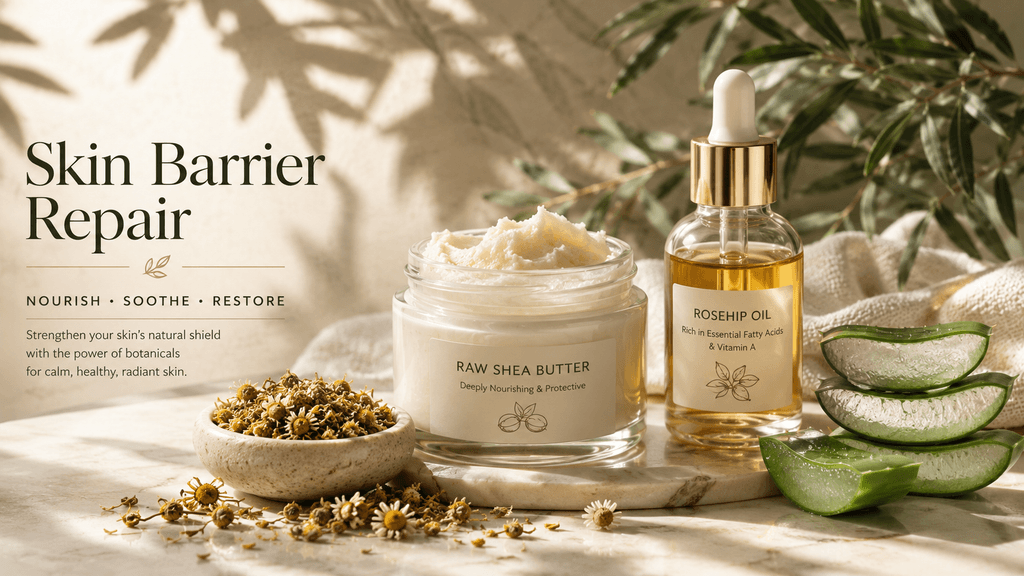
- Raw Shea Butter contains high levels of stearic and oleic fatty acids alongside Vitamin E to repair severe dryness and soothe raw skin.
- Mango Butter provides dense antioxidant protection while melting smoothly into rough patches to restore overall flexibility.
- Cocoa Butter offers dense emollient care that softens cracked skin tissue and shields against freezing temperatures.
Barrier Repairing Botanical Oils
Plant derived oils deliver essential fatty acids directly into your skin surface, helping rebuild damaged lipid layers.
- Rosehip Seed Oil features high concentrations of essential linoleic acid and natural Vitamin A to restore dehydrated skin while soothing redness.
- Jojoba Oil closely mirrors human sebum, allowing fast absorption that balances natural oil production without clogging pores.
- Plant Derived Squalane provides weightless, deep hydration that softens dry, sensitive skin while supporting natural cell regeneration.
- Argan Oil delivers rich Vitamin E and essential fatty acids that protect against free radical damage and reduce visible flaking.
Soothing Botanical Humectants and Extract Agents
Combining natural lipid oils with water binding plant extracts ensures long lasting hydration across all surface layers.
- Colloidal Oatmeal binds surface moisture, calms intense itching, and reduces localized redness effectively.
- Plant Derived Glycerin draws water from surrounding ambient air straight into dry skin cells, keeping them plump and resilient.
- Aloe Vera Leaf Juice delivers deep water based hydration that cools irritated skin and prepares it for heavier oil absorption.
Step by Step Natural Daily Routine for Barrier Repair
Following a consistent, simple daily routine allows your skin barrier to recover its strength while gradually soothing discoloration and inflammation.
Daily Morning Routine
- Wash gently with a mild, non foaming cream cleanser containing aloe vera or colloidal oatmeal using lukewarm water.
- Apply a hydrating natural serum containing plant derived glycerin or aloe vera to damp skin.
- Smooth a rich barrier repair cream containing raw shea butter or squalane over your face to lock in hydration.
- Finish every morning with a generous layer of broad spectrum mineral sunscreen containing non nano zinc oxide to block ultraviolet rays.
Daily Evening Routine
- Remove daily buildup, environmental pollutants, and mineral sunscreen using a gentle organic plant oil cleanser.
- Cleanse a second time with a mild hydrating wash to ensure pores remain clean without stripping surface lipids.
- Smooth a concentrated repair serum featuring rosehip seed oil or squalane across your face.
- Seal your evening routine with a rich night cream or a few drops of pure rosehip seed oil to nourish your barrier overnight.
Weekly At Home Treatments for Barrier Restoration
Incorporating soothing weekly natural masks accelerates skin recovery and restores natural softness to dry, sensitive skin.
Soothing Oat and Raw Honey Recovery Mask
Mix two tablespoons of colloidal oatmeal with one tablespoon of raw unpasteurized honey and one tablespoon of pure aloe vera gel.
- Raw honey acts as a natural humectant that draws moisture deep into thirsty skin tissue.
- Colloidal oatmeal soothes localized irritation, relieves itching, and strengthens fragile surface layers.
- Apply the smooth mixture evenly over your face, allow it to sit for fifteen minutes, and rinse gently with lukewarm water.
Avocado and Rosehip Nourishing Mask
Mash one quarter of a ripe avocado and mix it with one teaspoon of rosehip seed oil and half a teaspoon of organic turmeric powder.
- Avocado supplies dense essential fatty acids that nourish damaged lipid layers.
- Rosehip seed oil delivers vital antioxidants that encourage cellular repair and soothe raw skin.
- Smooth over clean skin, leave on for fifteen minutes, and wipe away clean using a soft damp cloth.
Lifestyle Habits That Accelerate Natural Barrier Repair
External skincare products work best when supported by healthy internal habits that lower systemic inflammation and support hydration.
Maintain Proper Indoor Humidity Levels
Running a cool mist humidifier in your bedroom during cold weather replaces water lost to indoor forced air heating systems. Keeping indoor humidity between forty and fifty percent prevents overnight moisture loss from your skin.
Avoid Overly Hot Water
While hot showers feel comforting during cold weather, hot water strips away essential natural lipids rapidly. Always wash your face with lukewarm water to preserve your natural protective surface oils.
Consume Essential Fatty Acids and Antioxidants
Nourish your skin barrier from the inside by eating foods rich in healthy lipids and free radical scavengers.
- Walnuts, flaxseeds, and chia seeds supply essential omega three fatty acids that reinforce natural skin lipids.
- Avocados and extra virgin olive oil provide healthy monounsaturated fats that keep skin cell membranes flexible.
- Berries and dark leafy greens supply vital antioxidants that protect skin cells against environmental oxidative stress.
Common Skincare Mistakes That Damage Your Barrier
Steer clear of these widespread mistakes to ensure your skin barrier recovers quickly and remains healthy.
- Applying Facial Oils to Completely Dry Skin: Oils lock in existing surface water rather than creating moisture, so always apply them over damp skin or hydration serums.
- Over Exfoliating Sensitive or Flaky Areas: Scrubbing away dry skin flakes with physical scrubs creates micro tears and worsens inflammation.
- Skipping Daily Sunscreen in Winter: Ultraviolet A rays penetrate cloud cover and reflect off snow, easily causing inflammation on unprotected skin.
- Using Harsh Astringents or Alcohol Toners: Applying strong synthetic astringents disrupts natural skin acidity, causing severe dryness and deeper barrier breakdown.
Regional Skincare Considerations Across the United States
Geographic climate shifts across different regions of the United States require subtle adjustments to your natural barrier repair routine.
Northern and Midwestern States
Residents living in states like Minnesota, Illinois, New York, and Massachusetts face freezing outdoor temperatures, biting winds, and heavy indoor heating.
- Require rich emollient creams containing raw shea butter, cocoa butter, and jojoba oil to guard against severe cold.
- Layering water binding humectants like glycerin beneath dense plant butters is essential to stop severe winter chapping.
Southern and Western States
Individuals living in regions like California, Texas, Arizona, and Florida experience milder winters paired with strong, consistent sun exposure year round.
- Require lightweight barrier repair options such as plant derived squalane or rosehip seed oil lotions.
- Applying broad spectrum mineral sunscreen every single day remains critical to prevent constant solar inflammation.
Frequently Asked Questions
How long does it take to repair a damaged skin barrier naturally?
Repairing a compromised skin barrier typically takes between two to four weeks of consistent, gentle care. Restoring severe barrier damage while maintaining optimal hydration usually requires six to eight weeks to match your natural cell turnover cycles.
Which natural oil is best for a damaged skin barrier?
Rosehip seed oil, jojoba oil, and plant derived squalane are exceptional choices. Rosehip seed oil supplies essential linoleic acid for barrier recovery, while jojoba oil and squalane absorb fast to balance natural lipids without clogging pores.
Can I use active exfoliants while repairing my skin barrier?
No, you should pause all physical scrubs and strong active acids while your barrier is actively recovering. Reintroduce mild natural exfoliants only after your skin no longer stings, flushes, or feels tight.
Why does my skin feel tight even after applying moisturizer?
If your skin feels tight after moisturizing, your barrier may be severely compromised, or you may be applying oils to completely dry skin. Apply water based humectants like aloe vera or glycerin to damp skin before sealing with cream or oil.
Are natural remedies safer for barrier repair than synthetic products?
Natural plant oils, raw butters, and gentle botanical extracts supply organic fatty acids and vitamins that work in harmony with human skin biology, reducing the risk of synthetic chemical irritation.
Summary of Natural Skin Barrier Repair
Restoring a compromised skin barrier while addressing dryness and irritation requires patience, gentle botanical ingredients, and consistent daily protection.
- Focus on how to repair a damaged skin barrier naturally using mild cream cleansers and rich plant lipid moisturizers.
- Select effective natural moisturizers containing raw shea butter, jojoba oil, rosehip seed oil, and colloidal oatmeal.
- Soothe delicate surface tissue safely using natural ingredients like aloe vera, raw honey, and plant derived glycerin.
- Protect your skin barrier daily with broad spectrum mineral sunscreen, run indoor humidifiers, and avoid hot water to maintain long lasting moisture and health.