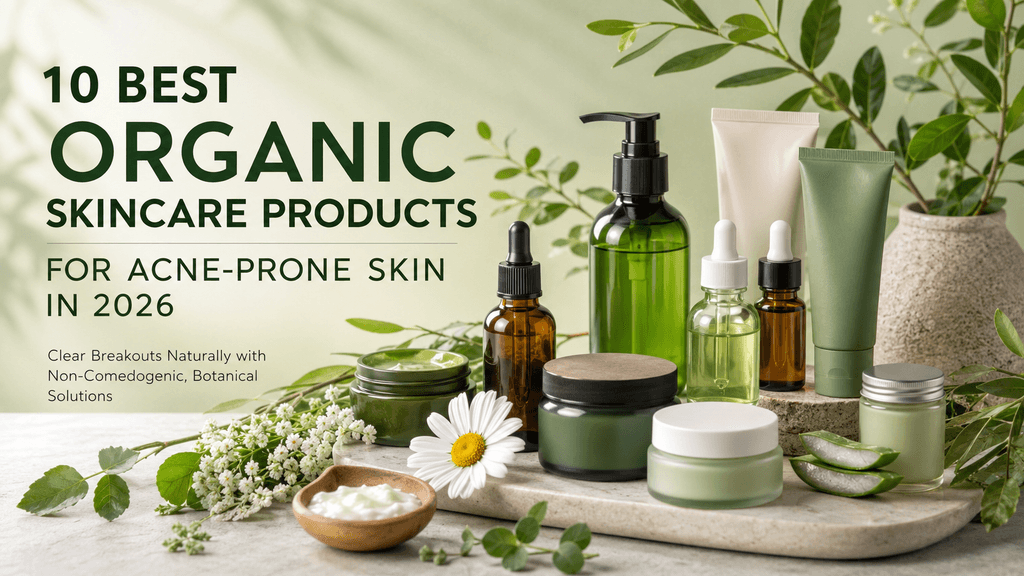
Organic Skincare Products for Acne-Prone Skin
Managing persistent acne while keeping your skin barrier healthy can be a complex challenge. Synthetic acne treatments often rely on aggressive active ingredients that strip the skin of essential lipids. This process frequently causes redness, flaking, and reactive sebum overproduction, which leads to further clogged pores.
Transitioning to certified organic skincare products for acne-prone skin provides a balanced solution. Plant-derived botanicals, natural salicylic acid from willow bark, cold-pressed seed oils, and soothing herbal extracts work with the natural biology of the skin. They target acne-causing bacteria, lower dermal inflammation, and balance surface sebum without damaging the microflora.
This comprehensive guide analyzes the top-performing organic formulas, the science behind natural acne solutions, how to build an effective daily skincare routine, and how to select non-comedogenic products tailored to your specific skin needs.
The Science of Organic Skincare Products for Acne-Prone Skin
Acne vulgaris occurs due to four primary factors: excess sebum production, irregular follicular hyperkeratinization, bacterial colonization, and localized inflammation. Conventional formulations attempt to treat these issues by stripping oil completely. This approach often leads to a damaged skin barrier.
| Acne Concern | Organic Solution |
|---|---|
| Excess Sebum | Balanced by Jojoba & Squalane |
| Clogged Pores | Exfoliated by Willow Bark BHA |
| Bacterial Overgrowth | Calmed by Tea Tree & Black Cumin Oil |
| Dermal Inflammation | Soothed by Blue Tansy & Centella Asiatica |
Organic skincare products rely on bio-identical compounds that match the natural lipids of human skin. Natural ingredients deliver specific fatty acids, polyphenols, and anti-inflammatory terpene compounds directly to cellular pathways.
Essential Fatty Acid Balance
Acne-prone skin often shows lower concentrations of linoleic acid in its surface sebum. Higher proportions of oleic acid make sebum thick and prone to clogging pores. High-linoleic organic oils, such as rosehip seed oil and evening primrose oil, restore lipid fluidity and prevent pore blockages.
Natural Salicylic Acid (Salicin)
Extracted naturally from white willow bark, salicin acts as a lipid-soluble beta-hydroxy acid (BHA). It penetrates oil-filled pores to dissolve dead keratinocytes without causing synthetic chemical burns. Read our full breakdown of salicylic acid benefits for a deeper look at how this ingredient works.
Microbiome Support
Organic formulations replace synthetic preservatives with botanical fermentations. This practice preserves beneficial microbes on the skin surface, preventing opportunistic acne bacteria from multiplying.
Market Growth of Clean Beauty in the United States and Worldwide
Consumer preferences across the United States, North America, Western Europe, and Asia-Pacific have shifted toward sustainable and clean cosmetic formulations. The global organic skincare market has expanded, driven by growing awareness of toxin-free ingredients and eco-friendly manufacturing.
| Year | Market Value (USD) | Primary Growth Drivers |
|---|---|---|
| 2025 | $13.32 Billion | Rising chemical awareness |
| 2026 | $14.77 Billion | Demand for clean acne solutions |
| 2030 | $22.70 Billion | Advanced botanical biotechnology |
Dermatologists in major United States medical centers increasingly acknowledge the value of integrating plant-based, non-comedogenic products into daily care routines. This approach helps reduce the side effects associated with long-term topical synthetic treatments.
The Top 10 Organic Skincare Products for Acne-Prone Skin
1. Tata Harper Clarifying Cleanser
Tata Harper operates its own organic farm in Vermont, USA, manufacturing high-performance, non-toxic skincare solutions. The Clarifying Cleanser is formulated specifically for oily, congested, and blemish-prone complexions.
Key Botanical Ingredients
- Salix Alba (White Willow Bark): Provides natural salicin to clear deep pore congestion.
- Tapioca Starch: Absorbs excess surface oil without stripping skin moisture.
- Aloe Vera Leaf Juice: Serves as a soothing base to calm redness.
Why It Is Effective for Acne This foaming gel cleanser utilizes seventeen active natural ingredients. It clears excess sebum and surface debris while maintaining essential hydration. Its mild enzymatic action purifies pores daily without causing irritation.
Product Specifications
- Certification: COSMOS Organic, EcoCert, Leaping Bunny Cruelty-Free.
- Best For: Active breakouts, excessive oiliness, and urban pollution protection.
- Origin: Vermont, United States.
2. Herbivore Botanicals Lapis Blue Tansy Face Oil
Herbivore Botanicals, based in Seattle, Washington, formulates plant-based products free from synthetic fillers. Lapis Face Oil addresses the misconception that acne-prone skin should avoid topical oils.
| Ingredient | Effect |
|---|---|
| Blue Tansy (Chamazulene) | Suppresses pro-inflammatory enzymes |
| Jojoba Seed Oil | Mimics natural sebum structure |
| Kukui Nut Oil | Delivers linoleic acid to clear pores |
Key Botanical Ingredients
- Blue Tansy Flower Oil: Contains high levels of chamazulene, which calms irritated skin tissue.
- Simmondsia Chinensis (Jojoba) Seed Oil: Mimics natural human sebum to regulate oil production.
- Squalane (Olive-Derived): Offers weightless hydration to restore lipid balance.
Why It Is Effective for Acne Chamazulene provides deep indigo color and strong anti-inflammatory properties. It soothes painful cystic breakouts, while lightweight jojoba oil and squalane help thin out sticky sebum to reduce pore blockages.
Product Specifications
- Certification: 100% Plant-Based, Cruelty-Free, Synthetic-Free.
- Best For: Redness, inflamed cystic acne, and damaged moisture barriers.
- Origin: Washington, United States.
3. Biossance Squalane + BHA Pore-Minimizing Toner
Biossance leads sustainable biotechnology by using sugarcane-derived squalane. This pore-minimizing toner offers a natural alternative to alcohol-based astringents that strip skin moisture.
Key Botanical Ingredients
- Raw White Willow Bark Extract: Delivers natural BHA to exfoliate inside pore walls.
- Sugarcane Squalane: Delivers weightless hydration to prevent compensatory oil production.
- Caviar Lime Extract: Provides natural alpha-hydroxy acids (AHAs) to refine skin texture.
Why It Is Effective for Acne This formula combines pore-clearing white willow bark with hydrating sugarcane squalane. It dissolves cellular debris, helps prevent blackheads, and clarifies clogged pores while leaving the skin balanced and comfortable.
Product Specifications
- Certification: EWG Verified, Vegan, Sustainable Sugarcane Sourced.
- Best For: Enlarged pores, uneven texture, and combination skin types.
- Origin: California, United States.
4. Pai Skincare Carbon Star Detoxifying Overnight Face Oil
Pai Skincare formulates organic products in London, United Kingdom, specifically tailored for sensitive, allergy-prone, and acneic skin types. Carbon Star is a concentrated night treatment designed to purify skin overnight.
Key Botanical Ingredients
- Organic Black Cumin Seed Oil: Offers antibacterial and antioxidant protection against acne microbes.
- Vegetable Charcoal: Absorbs excess surface impurities and sebum buildup.
- Organic Carapa Guianensis (Andiroba) Seed Oil: Rich in anti-inflammatory limonoids that speed up skin recovery.
Why It Is Effective for Acne Black cumin seed oil has a long history of use in clear-skin remedies. Its high thymoquinone content helps clear acne-causing bacteria, while activated charcoal draws out impurities during sleeping hours.
Product Specifications
- Certification: Soil Association Organic, COSMOS, Vegan, Cruelty-Free.
- Best For: Overnight detoxification, persistent blemishes, and sensitive skin.
- Origin: London, United Kingdom.
5. Indie Lee Purifying Face Wash
Indie Lee creates clean, eco-chic formulations aimed at enhancing skin health. The Purifying Face Wash cleanses gently, making it suitable for delicate skin experiencing active breakouts.
Key Botanical Ingredients
- Rosa Centifolia Flower Water: Calms angry breakouts and balances natural skin pH.
- Chamomile Extract: Helps minimize surface redness and soothe reactive tissue.
- Hydrolyzed Wheat Protein: Helps maintain essential moisture during cleansing.
Why It Is Effective for Acne This gentle gel cleanser washes away surface impurities, makeup, and daily pollutants without disrupting the delicate acid mantle. It leaves skin clean, soft, and prepared for targeted acne treatments.
Product Specifications
- Certification: Clean at Sephora Standard, Cruelty-Free, Paraben-Free.
- Best For: Daily morning and evening cleansing, sensitive acne-prone skin.
- Origin: United States.
6. Youth to the People Superfood Cleanser
Based in California, Youth to the People combines cold-pressed plant extracts with modern skincare science. The Superfood Cleanser acts as a daily nutrient infusion for acne-prone skin.
Key Botanical Ingredients
- Cold-Pressed Kale Extract: Rich in phytonutrients and vitamins C, E, and K to support skin recovery.
- Spinach Leaf Extract: Delivers antioxidants to soothe inflamed skin tissue.
- Green Tea Leaf Extract: Rich in epigallocatechin gallate (EGCG) to help regulate sebum production.
Why It Is Effective for Acne Green tea polyphenols, especially EGCG, help lower oil production and soothe skin inflammation. The lightweight gel texture thoroughly cleanses pores while providing protective antioxidants.
Product Specifications
- Certification: 100% Vegan, Cruelty-Free, Recyclable Glass Packaging.
- Best For: Environmental protection, excess surface oil, and daily pore care.
- Origin: California, United States.
7. Osea Blemish Balm
Osea Malibu has produced ocean-derived organic skincare formulations in California for over twenty-five years. The Blemish Balm provides non-greasy, weightless hydration designed specifically for acne-prone skin.
| Ingredient | Effect |
|---|---|
| Gigartina Seaweed Extract | Provides mineral-rich barrier support |
| Organic Tea Tree Oil | Delivers antibacterial protection |
| Thyme & Juniper Extracts | Clarifies pores & balances sebum |
Key Botanical Ingredients
- Organic Gigartina Seaweed: Delivers essential minerals while supporting natural skin barrier hydration.
- Organic Tea Tree Leaf Oil: Helps reduce acne-causing bacteria on the skin surface.
- Thyme and Juniper Oils: Provide clarifying properties to keep pores clear.
Why It Is Effective for Acne Unlike heavy moisturizers that can trap oil and bacteria, this balm delivers light, ocean-sourced hydration along with natural botanical purifiers. It leaves a matte finish while keeping skin balanced throughout the day.
Product Specifications
- Certification: Climate Neutral Certified, Ocean-Positive, USDA Certified Biobased.
- Best For: Oily skin, shiny T-zones, and humidity-induced breakouts.
- Origin: California, United States.
8. Cocokind Turmeric Spot Treatment
Cocokind manufactures accessible, certified organic skincare products focused on skin barrier health. The Turmeric Spot Treatment offers a targeted alternative to drying benzoyl peroxide treatments.
Key Botanical Ingredients
- Organic Turmeric Root Powder: Minimizes inflammation and helps fade post-acne dark marks. Learn more in our guide to natural remedies for dark spots.
- Organic Ginger Root Powder: Delivers antioxidants to support natural skin healing.
- Organic Tea Tree Leaf Oil: Offers localized antibacterial care for active pimples.
Why It Is Effective for Acne Curcumin, the active compound in turmeric, offers powerful anti-inflammatory benefits. It helps soothe active pimples while preventing post-inflammatory hyperpigmentation after breakouts clear.
Product Specifications
- Certification: USDA Organic, Leaping Bunny Certified, Transparent Supply Chain.
- Best For: Targeted spot care, deep papules, and post-acne dark spots.
- Origin: California, United States.
9. KYPRIS Clear Anointing Beauty Elixir
KYPRIS crafts luxury holistic formulations using wildcrafted and organic botanical ingredients. The Clear Anointing Beauty Elixir supports skin experiencing persistent inflammation and hormonal imbalances.
Key Botanical Ingredients
- Centella Asiatica (Gotu Kola): Supports natural tissue repair and helps minimize scar formation.
- CoEnzyme Q10: Offers antioxidant protection against sebum oxidation.
- Wildcrafted Botanical Lipids: Provide essential fatty acids to keep skin supple and soft.
Why It Is Effective for Acne Sebum oxidation can clog pores and trigger acne development. CoEnzyme Q10 combined with Centella Asiatica helps prevent oil oxidation while supporting natural tissue recovery from hormonal breakouts. For mature, acne-prone skin also dealing with fine lines, pair this with our guide to anti-aging serums for wrinkles.
Product Specifications
- Certification: Wildcrafted Botanical Ingredients, EcoCert Standard, Cruelty-Free.
- Best For: Hormonal breakouts, post-acne scarring, and mature acne-prone skin.
- Origin: Arizona, United States.
10. Eminence Organic Skin Care Clear Skin Probiotic Masque
Eminence Organics uses hand-picked sustainable ingredients from Hungary to formulate professional-grade organic products. The Clear Skin Probiotic Masque cools and purifies congested skin tissue.
Key Botanical Ingredients
- Cucumber Juice: Cools and refreshes inflamed, reactive skin.
- Yogurt Probiotics: Balance surface microflora to maintain healthy skin flora.
- Tea Tree Oil and Kaolin Clay: Absorb excess oil and deep pore impurities.
Why It Is Effective for Acne Probiotics help maintain a balanced microbial environment on the skin surface, preventing bad bacteria from overwhelming pores. Kaolin clay gently draws out impurities while cucumber juice calms active redness.
Product Specifications
- Certification: Certified Organic by Biokontroll Hungaria, Cruelty-Free.
- Best For: Weekly deep purification, cooling inflamed breakouts, and pore refinement.
- Origin: Hungary / Distributed in North America.
Comparison Table
| Product Name | Primary Focus | Key Active Ingredient | Skin Type Match | Country of Origin |
|---|---|---|---|---|
| Tata Harper Clarifying Cleanser | Pore Cleansing | Willow Bark BHA | Oily & Congested | United States |
| Herbivore Lapis Face Oil | Redness Reduction | Blue Tansy | Inflamed & Sensitive | United States |
| Biossance Pore-Minimizing Toner | Texture & Pores | White Willow Bark | Combination | United States |
| Pai Carbon Star Night Oil | Overnight Detox | Black Cumin Oil | Sensitive & Acneic | United Kingdom |
| Indie Lee Purifying Cleanser | Gentle Daily Wash | Rose Water | Sensitive & Normal | United States |
| Youth to the People Cleanser | Antioxidant Care | Cold-Pressed Kale | All Skin Types | United States |
| Osea Blemish Balm | Matte Hydration | Gigartina Seaweed | Oily & Combination | United States |
| Cocokind Turmeric Spot Treatment | Targeted Spot Care | Organic Turmeric | Active Pimples | United States |
| KYPRIS Clear Anointing Elixir | Scar & Barrier Care | Centella Asiatica | Hormonal & Mature | United States |
| Eminence Probiotic Masque | Weekly Deep Detox | Yogurt Probiotics | Congested & Oily | Hungary |
Building a Daily Organic Skincare Routine for Acne-Prone Skin
Consistency is essential when caring for acne-prone skin with organic formulations. Over-complicating a routine with too many active ingredients can disrupt the skin barrier. Follow this structured daily process for optimal results. For a broader, non-acne-specific version of this structure, see our guide to an organic skincare routine for glowing skin.
Morning Routine (AM)
Step 1: Gentle Cleansing Wash your face using a sulfate-free gel cleanser like Indie Lee Purifying Face Wash or Youth to the People Superfood Cleanser. Use room-temperature water. Avoid hot water, which can strip natural lipids and trigger excess oil production.
Step 2: Clarifying Toner Application Apply an alcohol-free BHA toner like Biossance Squalane + BHA Toner using a reusable cotton pad or your fingertips. Press the product gently into the T-zone and congested areas to clarify pores.
Step 3: Lightweight Hydration Apply a non-comedogenic moisturizer like Osea Blemish Balm. Ensure the skin receives balanced hydration without heavy, pore-clogging oils.
Step 4: Sunscreen Protection Finish with a broad-spectrum, non-nano zinc oxide mineral sunscreen. Zinc oxide provides physical sun protection while calming active dermal inflammation.
Evening Routine (PM)
Step 1: Thorough Cleansing Cleanse the skin carefully to remove makeup, mineral sunscreen, and daily environmental pollutants using Tata Harper Clarifying Cleanser. Massage the product over your face for sixty seconds to allow the natural botanical extracts to clear impurities.
Step 2: Targeted Night Treatment Apply three to four drops of a facial treatment oil like Herbivore Lapis Oil or Pai Carbon Star Overnight Oil. Gently press the oil into damp skin to seal in moisture and repair the lipid barrier overnight.
Step 3: Spot Care Application Apply a targeted treatment stick like Cocokind Turmeric Spot Treatment directly to active blemishes or dark spots. Leave the product on overnight to lower localized inflammation.
Ingredients to Look For vs. Ingredients to Avoid
Selecting effective organic skincare products for acne-prone skin requires careful evaluation of ingredient labels. High marketing claims do not always guarantee that a product is non-comedogenic.
Beneficial Organic Ingredients
- Willow Bark Extract: Provides natural salicin, a lipid-soluble beta-hydroxy acid that clears pore congestion gently.
- Blue Tansy Oil: High in chamazulene, which calms redness, swelling, and discomfort associated with breakouts.
- Jojoba Seed Oil: A liquid wax ester that matches human sebum, helping balance overall skin oiliness.
- Centella Asiatica (Gotu Kola): Supports collagen synthesis, speeds up skin repair, and fades post-acne marks.
- Black Cumin Seed Oil: Rich in thymoquinone, offering powerful antibacterial protection against acne microflora.
- Green Tea Extract (EGCG): A potent antioxidant that limits sebum oxidation and calms reactive skin.
Ingredients to Avoid in Acne Routines
| Ingredient Class | Common Examples | Potential Risk |
|---|---|---|
| Comedogenic Lipids | Coconut Oil, Cocoa Butter | Clogs pores |
| Drying Alcohols | SD Alcohol 40, Ethanol | Strips lipid barrier |
| Synthetic Fragrances | Parfum, Phthalates | Triggers contact rash |
| Heavy Silicones | Dimethicone | Traps debris inside |
- Unrefined Coconut Oil (Cocos Nucifera): Highly comedogenic (rating 4 out of 5 on the comedogenicity scale). It can cause pore blockages and follicular pimples, and worsen blackheads.
- Denatured Alcohol (SD Alcohol 40): Strips the protective lipid layer, leading to reactive oil overproduction.
- Synthetic Fragrances (Parfum): Common sources of skin irritation and allergic contact dermatitis, which can worsen acne inflammation.
- Heavy Silicones (Dimethicone): Create a film over pores, trapping dead skin cells, oil, and bacteria underneath.
Frequently Asked Questions
Are organic skincare products effective for treating acne?
Yes. Organic skincare formulations utilize plant-derived actives like willow bark (natural salicylic acid), tea tree oil, and blue tansy. These botanicals soothe inflammation, balance excess oil production, and clear pore congestion without stripping the protective skin barrier.
Will applying facial oils worsen acne-prone skin?
No. Non-comedogenic plant oils high in linoleic acid, such as jojoba oil, rosehip seed oil, and squalane, do not clog pores. Instead, they help balance sticky, oleic-rich sebum, regulating oil production and keeping pores clear.
How long does it take to see results from an organic acne routine?
Most users notice reduced redness and calmer inflammation within two to three weeks of consistent product use. Significant pore clarification and fewer new breakouts generally occur after four to six weeks, aligning with the skin’s natural 28-day cellular turnover cycle.
Which natural ingredient helps fade post-acne dark spots?
Turmeric root extract, rosehip seed oil, Centella Asiatica, and vitamin C from organic sources like kakadu plum help fade post-inflammatory hyperpigmentation. See our full guide on how to reduce hyperpigmentation naturally for more detail.
What is the difference between certified organic and clean skincare?
Certified organic products must meet strict regulatory standards set by organizations like the USDA Organic, EcoCert, or COSMOS standard. These certifications guarantee that ingredients are grown without synthetic pesticides, parabens, or chemical fertilizers. The term “clean” is often self-regulated by brands and focuses on avoiding toxic or irritating ingredients without mandatory organic agricultural certification.