

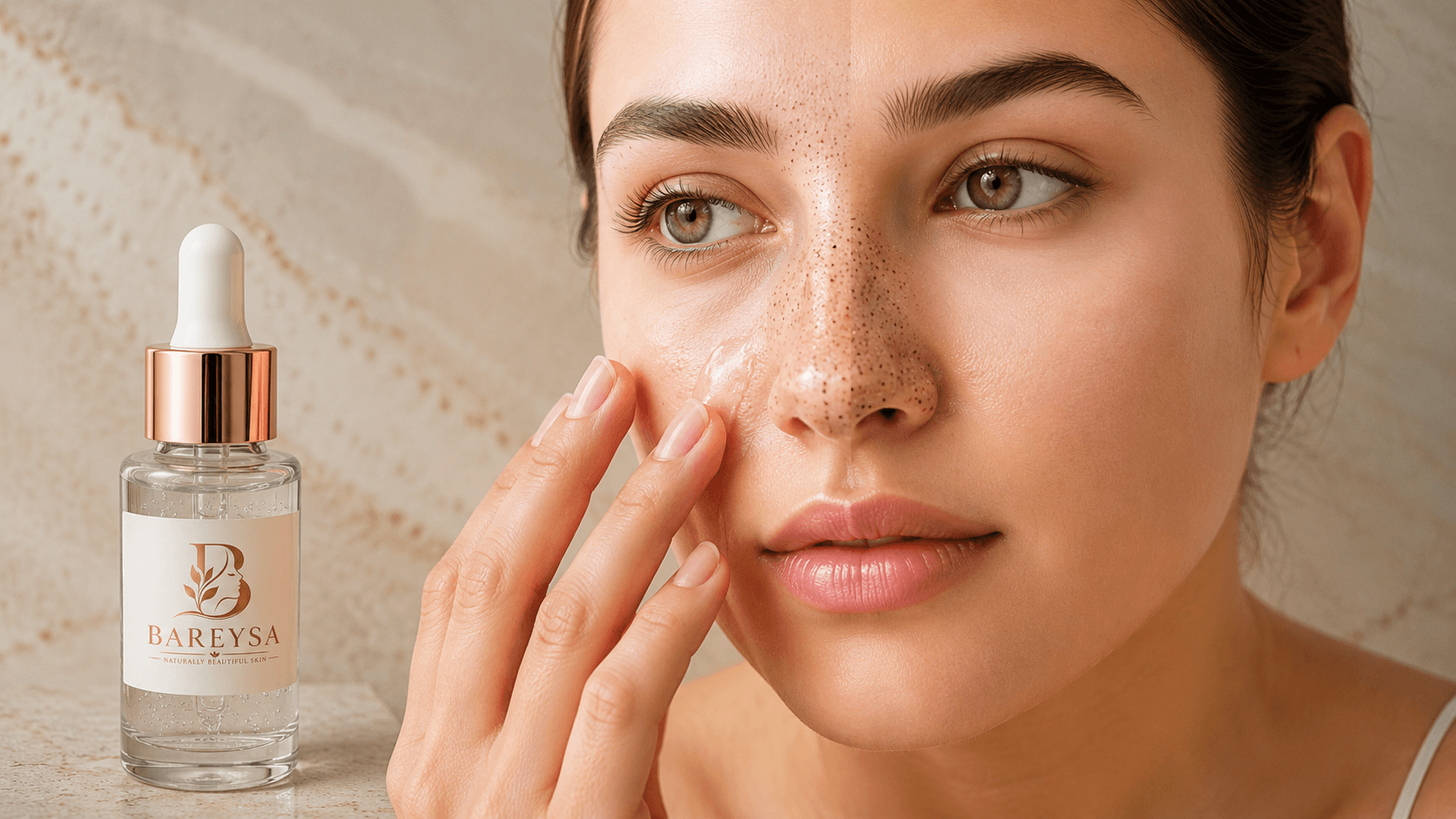
Blackhead removal is most effective when you use a consistent skincare routine that combines gentle cleansing, salicylic acid, appropriate exfoliation, hydration, and sun protection. Blackheads form when excess sebum and dead skin cells build up inside hair follicles. The exposed material reacts with air and becomes dark, which gives blackheads their characteristic appearance. Avoiding squeezing and harsh scrubbing is also important because physical irritation can worsen inflammation and increase the risk of dark marks.
What Are Blackheads and Why Do They Form?
Blackheads are a type of acne lesion known as open comedones. They commonly appear on areas of the face that contain more sebaceous glands, including the nose, forehead, chin, and cheeks.
Although blackheads may look like small particles of dirt, they are not caused by dirt sitting on the surface of your skin. They develop when sebum and dead skin cells accumulate inside a hair follicle.
Several factors can contribute to blackhead formation, including:
- Excess sebum production
- Dead skin cell buildup
- Hormonal changes
- Naturally oily or combination skin
- Certain skincare or cosmetic products
- Inadequate cleansing
- Genetic tendency toward clogged pores
- Excessive use of heavy or occlusive products
Understanding why blackheads form is the first step toward choosing an effective blackhead removal routine.
How Does a Blackhead Form?
Every hair follicle contains a sebaceous gland that produces sebum. Sebum is an oily substance that helps protect and lubricate the skin.
When excess sebum combines with dead skin cells inside the follicle, a plug can develop. If the opening of the follicle remains exposed to air, the material at the surface can oxidize and appear dark.
This is why blackheads are black. The dark color does not mean that the pore is filled with dirt.
Blackheads vs. Whiteheads
Blackheads and whiteheads are both types of comedonal acne, but they have different appearances.
A blackhead is an open comedone. The pore opening remains exposed, allowing the material inside to oxidize and appear dark.
A whitehead is a closed comedone. The follicle opening is covered by skin, so the material does not have the same exposure to air and does not develop the typical black appearance.
Blackheads vs. Sebaceous Filaments
Sebaceous filaments are often mistaken for blackheads, especially around the nose.
They are normal structures within the pores that help move sebum toward the skin surface. They are usually smaller, more uniform, and may look gray, yellowish, or light brown.
Unlike blackheads, sebaceous filaments are not something that can be permanently removed. If you squeeze them, the pores will generally refill because the structures are a normal part of your skin.
Knowing the difference between blackheads and sebaceous filaments can help you avoid unnecessary extraction and irritation.
Best Ingredients for Blackhead Removal
The right ingredients can make a significant difference when treating clogged pores. Instead of using multiple aggressive products at once, choose a small number of proven ingredients and introduce them gradually.
Salicylic Acid for Blackheads
Salicylic acid is one of the most useful ingredients for blackhead-prone skin. It is a beta-hydroxy acid (BHA) that can penetrate into oily pores and help loosen the buildup of sebum and dead skin cells.
Regular use can help reduce clogged pores and improve the appearance of blackheads.
If you are new to salicylic acid, start with a lower-strength product and use it a few times per week rather than applying it excessively.
You can also learn more about the ingredient through our guide to salicylic acid benefits.
Retinol and Retinoids
Retinoids and retinol help regulate skin cell turnover. By encouraging more normal shedding of dead skin cells, they can help reduce the formation of clogged pores over time.
Retinol can also support smoother skin texture and provide additional benefits related to signs of skin aging.
If you have sensitive skin, introduce retinol slowly and use moisturizer to reduce the risk of dryness and irritation. Our guide to retinol for sensitive skin explains how to approach this ingredient more carefully.
Niacinamide for Oily and Blackhead-Prone Skin
Niacinamide, also known as vitamin B3, is a versatile skincare ingredient that can support the skin barrier and help improve the appearance of oily skin.
It does not exfoliate blackheads in the same way that salicylic acid does. However, it can complement a blackhead-focused routine by supporting barrier function and helping the skin look less oily.
Learn more about this ingredient in our guide to niacinamide serum benefits.
Alpha Hydroxy Acids
Alpha hydroxy acids (AHAs), including glycolic acid and lactic acid, work mainly on the skin’s surface.
They can help loosen dead skin cells and improve rough or uneven texture. However, using AHAs too frequently alongside salicylic acid or retinol can cause irritation.
If you already use a BHA or retinoid, introduce an AHA carefully rather than combining several exfoliating products at the same time.
Clay Masks
Clay ingredients such as kaolin and bentonite can absorb excess oil from the skin surface.
A clay mask may be useful once or twice a week for oily or combination skin, but it should not be treated as a permanent cure for blackheads.
If your skin becomes tight, flaky, or irritated after using a clay mask, reduce the frequency or stop using it.
Skincare Routine for Blackhead Removal
A consistent routine is generally more useful than repeatedly trying new products.
Your routine should focus on four basic goals:
- Remove excess oil and impurities.
- Keep pores from becoming excessively congested.
- Support normal skin cell turnover.
- Protect and maintain the skin barrier.
Morning Routine
Step 1: Use a Gentle Cleanser
Start your morning with a gentle cleanser suited to your skin type.
Avoid very harsh cleansers that leave your skin feeling extremely tight or dry. Over-cleansing can irritate the skin and make it more difficult to maintain a healthy barrier.
Step 2: Apply a Suitable Treatment
If your skin tolerates niacinamide, you can apply a niacinamide serum after cleansing.
Niacinamide can complement a blackhead-focused routine by supporting the skin barrier and helping manage the appearance of excess oil.
Step 3: Moisturize
Do not skip moisturizer simply because your skin is oily.
Choose a lightweight, non-comedogenic moisturizer that provides hydration without feeling excessively heavy.
If your skin is dry, explore our guide to natural moisturizers for dry skin.
Step 4: Apply Sunscreen
Finish your morning routine with broad-spectrum sunscreen.
Daily sun protection is especially important if you are also trying to reduce dark marks left after acne or blackhead picking. UV exposure can make hyperpigmentation more noticeable and difficult to fade.
Evening Routine
Your evening routine should remove sunscreen, makeup, oil, and environmental impurities while giving your skin an opportunity to recover.
Step 1: Remove Makeup and Sunscreen
If you wear makeup or water-resistant sunscreen, use a suitable first cleanser or cleansing oil to help dissolve these products.
Double cleansing can be useful for some people, but it is not mandatory for everyone. If one gentle cleanser effectively removes your products without leaving residue, there is no need to cleanse repeatedly.
For readers interested in multi-step skincare, our Korean skincare routine guide explains the general approach.
Step 2: Use a Gentle Water-Based Cleanser
Follow with a gentle cleanser if you use a first cleansing step.
Massage the cleanser gently rather than aggressively scrubbing the nose, forehead, or chin.
Step 3: Use a Blackhead Treatment
Salicylic acid is a practical choice for blackhead-prone skin.
Start with two or three applications per week if your skin is new to chemical exfoliation. If your skin tolerates the product well, you can adjust the frequency according to the product instructions and your skin’s needs.
Retinol can also be incorporated into a routine, but beginners should introduce it gradually.
Rather than immediately combining multiple strong actives, alternate them to reduce the chance of irritation.
Step 4: Moisturize
After your treatment, apply a moisturizer that supports your skin barrier.
Look for ingredients such as ceramides, glycerin, hyaluronic acid, or panthenol if your skin needs additional hydration.
Step 5: Keep the Routine Consistent
Blackhead removal is not an overnight process.
Give your routine enough time to work before deciding that a product has failed. Changing products every few days can make it difficult to determine what is actually helping or irritating your skin.
Weekly Treatments for Clogged Pores
A clay mask can be used once or twice a week if your skin is oily and tolerates it well.
However, avoid using a clay mask on the same day as several other strong exfoliating treatments if your skin is prone to dryness or irritation.
Physical scrubs are generally unnecessary for blackhead removal. They may temporarily make the skin feel smoother, but excessive friction can cause irritation.
Blackhead Removal for Sensitive Skin
Sensitive skin requires a slower and more cautious approach.
Ingredients such as salicylic acid, glycolic acid, and retinoids can be useful, but they may cause irritation if introduced too quickly or used too frequently.
Signs that your routine may be too aggressive include:
- Burning
- Persistent redness
- Flaking
- Tightness
- Increased sensitivity
- Stinging when applying basic skincare products
If these symptoms occur, reduce or temporarily stop active treatments and focus on gentle cleansing, moisturizing, and sun protection.
For a more detailed routine, read our guide to organic skincare routine for sensitive skin.
How to Introduce Salicylic Acid to Sensitive Skin
Start with a low-frequency application.
Use the product according to its instructions and observe how your skin responds. Do not increase frequency simply because you want faster results.
If irritation develops, give your skin time to recover before trying the active again.
Bakuchiol as a Gentle Alternative
Bakuchiol is a plant-derived ingredient that is often used as an alternative to retinol in skincare routines.
Although it is not identical to retinol and should not be treated as a direct one-to-one replacement, some people choose bakuchiol because they prefer a gentler-feeling routine.
If you are highly sensitive, patch testing and gradual introduction are still recommended.
Barrier-Friendly Skincare
When treating blackheads, your goal should not be to make your skin feel extremely dry.
Healthy skin needs hydration and a functioning barrier.
A simple sensitive-skin routine can include:
- Gentle cleanser
- Hydrating serum
- Moisturizer
- Sunscreen
- One carefully selected active treatment
Keeping the routine simple can make it easier to identify what works for your skin.
How to Repair a Damaged Skin Barrier
If you have been using too many acids, scrubs, pore strips, or strong treatments, your skin may become irritated.
A damaged or irritated barrier may cause:
- Dryness
- Redness
- Flaking
- Burning
- Increased sensitivity
- Tightness
When this happens, temporarily reduce active treatments and return to a basic routine focused on cleansing, moisturizing, and sun protection.
Avoid trying to remove every blackhead while your skin is irritated.
For additional guidance, read our guide on how to repair a damaged skin barrier.
Blackheads and Hyperpigmentation
Blackheads themselves are not the only concern. Picking, squeezing, or repeatedly irritating clogged pores can leave behind dark marks.
This is particularly important for people whose skin is prone to post-inflammatory hyperpigmentation.
Why Picking Blackheads Can Cause Dark Marks
When you squeeze a blackhead aggressively, you can injure the surrounding skin.
Inflammation caused by this trauma may lead to a temporary red, brown, or dark mark after the blemish heals.
Instead of forcing the contents out, use a consistent skincare routine and allow active ingredients to gradually improve clogged pores.
How to Prevent Dark Marks
The simplest strategy is to avoid picking.
Also make sunscreen a daily part of your routine. Sun exposure can make existing pigmentation appear darker and may slow the process of fading discoloration.
If you already have dark spots, explore our guides to natural remedies for dark spots and natural remedies for hyperpigmentation.
You can also learn more about how to reduce hyperpigmentation naturally.
Common Blackhead Removal Mistakes
Over-Exfoliating
One of the most common mistakes is assuming that more exfoliation will produce faster results.
Using salicylic acid, glycolic acid, lactic acid, retinol, scrubs, and pore-clearing masks all at once can overwhelm your skin.
More active ingredients do not automatically mean better results.
A simple routine that your skin tolerates is usually easier to maintain.
Squeezing Blackheads
Squeezing may provide temporary satisfaction, but it can cause irritation and inflammation.
Repeated picking may also increase the risk of post-inflammatory hyperpigmentation and scarring.
If a stubborn comedone needs professional extraction, consider seeing a qualified dermatologist or trained skincare professional rather than repeatedly squeezing it yourself.
Using Pore Strips Too Often
Pore strips can temporarily remove material from the surface of pores, but they do not address the underlying tendency to form blackheads.
Frequent use can also irritate some people’s skin.
They should not replace a consistent skincare routine.
Skipping Moisturizer
Oily skin still needs hydration.
Instead of skipping moisturizer, choose a lightweight product that suits your skin type.
Using Heavy Products
Some people develop more congestion when using very heavy skincare or cosmetic products.
If you notice that your skin becomes more clogged after introducing a particular product, review the formulation and consider switching to a lighter, non-comedogenic option.
Scrubbing Too Hard
Blackheads are not surface dirt that can simply be scrubbed away.
Aggressive scrubbing can damage the skin barrier without addressing the cause of the clogged pore.
Use gentle cleansing and appropriate chemical exfoliation instead.
How to Prevent Blackheads From Coming Back
Blackhead removal should be viewed as an ongoing skincare process rather than a one-time treatment.
Keep Your Skin Clean Without Over-Cleansing
Cleanse consistently, particularly after wearing makeup or sunscreen.
At the same time, avoid repeatedly washing your face throughout the day.
Choose Products Carefully
Look for products appropriate for oily, combination, acne-prone, or congested skin.
If you regularly experience clogged pores, review your entire routine rather than focusing on one product.
You can explore our guide to skincare products for more information.
Change Pillowcases Regularly
Pillowcases collect oil, sweat, makeup, and skincare residue.
Regular washing can help maintain a cleaner sleeping environment for your skin.
Remove Makeup Before Sleeping
Leaving makeup on overnight can contribute to congestion, particularly if the products are heavy or not suitable for your skin.
Always remove makeup before bed.
Avoid Touching Your Face
Frequent touching can transfer oil and impurities to the skin and may also encourage picking.
If you notice yourself squeezing blackheads throughout the day, keeping your hands away from your face can make a meaningful difference.
Use Sunscreen Daily
Daily sunscreen is important for maintaining healthy skin and preventing dark marks from becoming more noticeable.
Stay Consistent
A consistent routine is more valuable than constantly switching products.
Give a new routine enough time to show whether it is helping, while paying attention to signs of irritation.
Can Diet Affect Blackheads?
Diet is not the only cause of blackheads, and changing your diet alone will not remove clogged pores.
However, overall nutrition can contribute to general skin health.
A balanced diet that includes vegetables, fruits, protein, healthy fats, and adequate fluids supports overall health.
If you notice that a particular food consistently seems to worsen your skin, discuss the pattern with a healthcare professional rather than unnecessarily eliminating large food groups.
Does Humidity Affect Blackhead-Prone Skin?
Environmental conditions can influence how your skin feels and behaves.
Hot and humid weather may increase sweating and make oily skin feel more congested. Cold or dry weather can increase dryness and irritation.
If you live in a hot climate, lightweight skincare products may feel more comfortable.
During colder months, focus more on maintaining hydration and protecting the skin barrier.
How Long Does Blackhead Removal Take?
Blackhead removal requires patience.
Some people notice improvements within several weeks, while others need longer depending on the severity of congestion, skin type, products used, and consistency.
Do not judge a routine after only a few days.
If you are using an active ingredient correctly and your skin tolerates it, give the routine adequate time before making major changes.
If blackheads remain persistent despite consistent treatment, a dermatologist can determine whether another type of acne or skin condition is contributing to the problem.
Frequently Asked Questions About Blackhead Removal
1. What is the best ingredient for blackhead removal?
Salicylic acid is one of the most useful ingredients for blackhead-prone skin because it can work within oily pores and help loosen accumulated sebum and dead skin cells.
2. Can I remove blackheads at home?
Yes. A gentle routine using cleansing, appropriate salicylic acid, moisturizer, and sunscreen can help manage blackheads at home. Avoid aggressive squeezing or extraction.
3. Can blackheads disappear naturally?
Some blackheads may clear over time, but many persist without treatment. Consistent skincare can help reduce existing congestion and prevent new blackheads.
4. Does squeezing blackheads make them worse?
Squeezing can cause inflammation and skin injury. It may also increase the risk of dark marks and scarring.
5. Can dry skin have blackheads?
Yes. Blackheads are not limited to oily skin. Dry skin can also experience clogged pores, particularly when dead skin cells accumulate.
6. Can I use salicylic acid every day?
It depends on the product and your skin’s tolerance. If you are new to salicylic acid, start slowly and increase frequency only if your skin remains comfortable.
7. Can I use salicylic acid and retinol together?
Both ingredients can be useful, but using them together may increase irritation, especially for beginners or sensitive skin. Alternating them can be a simpler approach.
8. Does steam remove blackheads?
Steam does not permanently remove blackheads or literally open the pores. Warmth may soften surface buildup, but aggressive extraction afterward can still irritate the skin.
9. Are sebaceous filaments blackheads?
No. Sebaceous filaments are normal structures inside pores, while blackheads are open comedones.
10. Can makeup cause blackheads?
Certain heavy or pore-clogging products may contribute to congestion in some people. Choose products suitable for your skin and remove makeup thoroughly before sleeping.
11. Are pore strips good for blackhead removal?
Pore strips may temporarily remove surface material, but they do not address the underlying tendency to form blackheads. They should not be relied upon as the main treatment.
12. Should I use a facial scrub for blackheads?
You generally do not need a harsh facial scrub to treat blackheads. Excessive friction can irritate the skin. Chemical exfoliation with an appropriate BHA may be more useful.
13. Can baking soda remove blackheads?
Baking soda is not recommended as a facial blackhead treatment. Its alkaline nature can disrupt the skin’s normal environment and cause irritation.
14. Does drinking more water remove blackheads?
Drinking enough water supports overall health, but water alone does not remove blackheads. Clogged pores require appropriate topical skincare.
15. Can moisturizer cause blackheads?
Some products may feel too heavy or contribute to congestion for certain individuals. However, skipping moisturizer completely is not necessary. Choose a lightweight, non-comedogenic formulation suitable for your skin.
16. How often should I exfoliate if I have blackheads?
Start conservatively, particularly if you have sensitive skin. Two or three applications per week of a suitable exfoliant may be a reasonable starting point, depending on the product and your skin’s tolerance.
17. Can niacinamide remove blackheads?
Niacinamide does not directly dissolve blackheads like salicylic acid. However, it can complement a routine by supporting the skin barrier and helping manage the appearance of excess oil.
18. Is retinol good for blackheads?
Retinol can help regulate skin cell turnover and may reduce the tendency for pores to become clogged over time.
19. Can blackheads leave dark spots?
Picking or squeezing blackheads can cause inflammation that may result in post-inflammatory hyperpigmentation.
20. How can I prevent blackheads on my nose?
Use gentle cleansing, an appropriate salicylic acid product, regular moisturizing, and daily sunscreen. Avoid repeatedly squeezing the pores.
21. Why do blackheads keep coming back?
Your sebaceous glands continuously produce sebum, so pores can become congested again. Long-term maintenance is therefore important.
22. Can sensitive skin use salicylic acid?
Sensitive skin may tolerate salicylic acid when it is introduced slowly and used at an appropriate frequency. Stop or reduce use if significant irritation develops.
23. Should I use clay masks for blackheads?
A clay mask can help absorb excess surface oil and may temporarily improve the appearance of oily skin. It should complement, rather than replace, a consistent routine.
24. When should I see a dermatologist for blackheads?
Consider seeing a dermatologist if blackheads are persistent, widespread, painful, associated with significant acne, or not improving after a consistent over-the-counter routine.
25. What is the safest way to remove stubborn blackheads?
The safest approach is usually a consistent skincare routine rather than aggressive manual extraction. A dermatologist can perform professional extraction when appropriate.
Final Thoughts on Blackhead Removal
Effective blackhead removal does not require aggressive scrubbing, squeezing, or a complicated skincare routine. The most practical approach is to keep your skin clean without stripping it, use proven ingredients such as salicylic acid appropriately, introduce retinol carefully when suitable, moisturize consistently, and protect your skin from the sun.
Most importantly, avoid picking at your pores. Blackheads can be frustrating, but damaging the surrounding skin can create a second problem in the form of inflammation, dark marks, or scarring.
With the right products and a consistent routine, you can gradually improve clogged pores and maintain smoother-looking, healthier skin.