

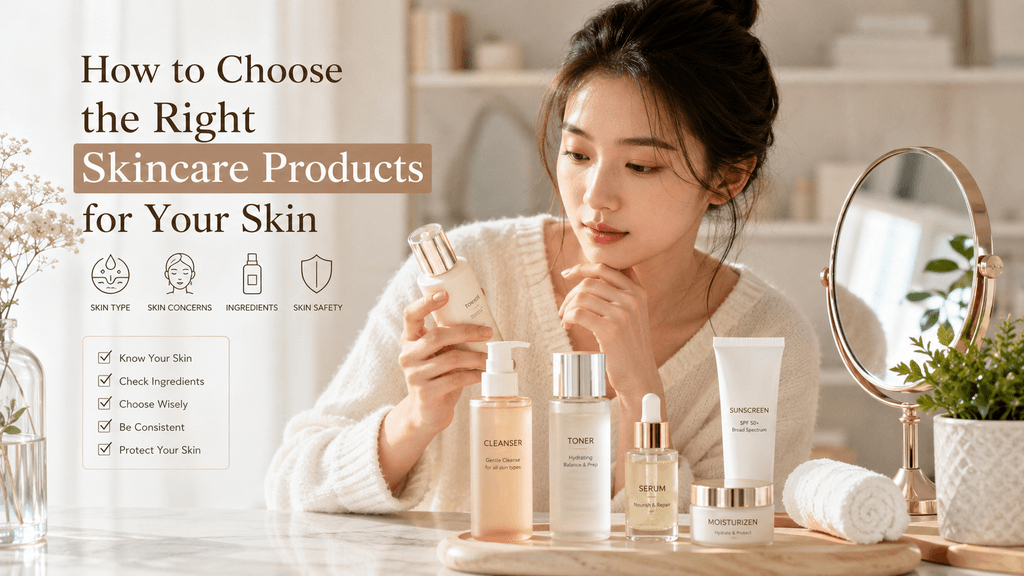
Choosing the right skincare products can feel overwhelming. Walk into any beauty store or browse an online skincare shop and you will find cleansers, toners, essences, serums, moisturizers, oils, masks, and sunscreens designed for different skin types and concerns.
The real question is not simply which product is popular or widely advertised. The better question is: which skincare products are right for your specific skin?
Every person has different skin characteristics:
- Dry skin needs a different approach from oily skin.
- Sensitive skin may react to ingredients that work well for someone else.
- Acne-prone skin benefits from carefully selected active ingredients.
- Mature skin requires extra focus on hydration, barrier support, and elasticity.
The best skincare routine is not necessarily the longest routine it is built around your skin type, individual skin concerns, lifestyle, climate, and ingredient tolerance.
Quick Answer: How Do You Choose the Right Skincare Products?
If you want a straightforward checklist, follow these key steps:
- Identify your skin type: Normal, Dry, Oily, Combination, or Sensitive.
- Identify your main skin concerns: Acne, hyperpigmentation, redness, dullness, fine lines, or dehydration.
- Check the ingredient list: Look at active ingredients rather than relying only on marketing claims.
- Start with a simple core routine: Gentle Cleanser, Moisturizer, and Sunscreen.
- Introduce new active products gradually: Add one new product at a time so you can track how your skin reacts.
- Choose product textures based on skin tolerance: Heavy creams for dry skin, gel formulas for oily skin.
- Use sunscreen during the daytime: Sun protection is essential regardless of skin type.
- Give products enough time to show results: Most ingredients take at least 4 to 8 weeks of consistent use.
- Stop using products that cause irritation: Redness, stinging, burning, or prolonged breakouts are signs of skin barrier damage.
- Adjust your routine when needed: Changes in climate, season, age, or lifestyle may require adjustments.
What Are Skincare Products?
Skincare products are formulations designed to cleanse, hydrate, nourish, protect, and improve the overall appearance and function of the skin. They range from everyday essentials to specialized treatments targeting specific skin conditions.
Main Categories of Skincare Products & Their Purpose
- Facial Cleansers: Formulated to remove dirt, excess oil, sweat, makeup, pollutants, and sunscreen without stripping the skin barrier.
- Toners: Hydrating or exfoliating liquids that balance the skin, remove leftover residue, and prepare skin for subsequent layers.
- Essences: Lightweight, watery treatments popular in Asian beauty routines that provide deep hydration and improve product absorption.
- Serums: Highly concentrated formulations packed with active ingredients designed to target specific concerns like dark spots, acne, aging, or dehydration.
- Moisturizers: Creams, lotions, or gels that lock in hydration, support the skin barrier, and prevent trans-epidermal water loss (TEWL).
- Face Oils: Nourishing oils that provide extra lipids, seal in moisture, and soften dry or compromised skin.
- Sunscreens (SPF): Formulations that shield skin from harmful Ultraviolet (UV) rays, preventing premature aging, hyperpigmentation, and skin damage.
- Exfoliants (AHA/BHA/PHA): Chemical or physical agents that slough off dead skin cells, unclog pores, and smooth skin texture.
- Face Masks: Intensive weekly or periodic treatments designed for deep hydration, pore cleansing, calming, or brightening.
- Eye Creams: Formulated specifically for the delicate skin around the eyes to address fine lines, dark circles, or puffiness.
Understanding Your Skin Type Before Buying Products
Skin type refers to how much sebum (oil) your skin naturally produces and how your skin barrier behaves throughout the day. Your skin type can change over time due to weather, age, hormones, stress, and lifestyle factors.
1. Normal Skin
- Characteristics: Well-balanced oil and moisture levels, rare breakouts, minimal sensitivity, and smooth texture.
- Recommended Products: Gentle cleanser, lightweight hydrating serum, daily moisturizer, and broad-spectrum SPF 30+.
- Primary Goal: Maintain skin health and protect the natural moisture barrier.
2. Dry Skin
- Characteristics: Produces less sebum, often feels tight, rough, flaky, or dull, especially after cleansing.
- Key Ingredients to Look For: Hyaluronic Acid, Glycerin, Ceramides, Squalane, Shea Butter, Panthenol (Vitamin B5), Aloe Vera, Fatty Acids.
- Recommended Products: Hydrating cream cleansers, rich moisturizers, facial oils, and nourishing night creams.
3. Oily Skin
- Characteristics: Overproduction of sebum, shiny appearance (especially T-zone), enlarged pores, prone to blackheads and breakouts.
- Key Ingredients to Look For: Niacinamide, Salicylic Acid (BHA), Zinc PCA, Green Tea Extract, Lightweight Hyaluronic Acid.
- Recommended Products: Gel or foaming cleansers, oil-free water-gel moisturizers, and non-comedogenic sunscreens.
4. Combination Skin
- Characteristics: Oily T-zone (forehead, nose, chin) with normal or dry cheeks.
- Key Strategy: Balanced products that hydrate without clogging pores, or targeted multi-zoning (lightweight gels on T-zone, richer creams on cheeks).
5. Sensitive Skin
- Characteristics: Easily turns red, stings, burns, or reacts negatively to harsh ingredients, fragrances, or environmental changes.
- Key Ingredients to Look For: Centella Asiatica (Cica), Colloidal Oatmeal, Allantoin, Ceramides, Chamomile, Aloe Vera.
- Strategy: Avoid artificial fragrances, essential oils, drying alcohols, and harsh physical scrubs. Choose minimal-ingredient formulas labeled fragrance-free and hypoallergenic.
Choosing Products Based on Specific Skin Concerns
| Skin Concern | Key Ingredients to Target | Recommended Product Types |
|---|---|---|
| Acne & Breakouts | Salicylic Acid (BHA), Niacinamide, Azelaic Acid, Benzoyl Peroxide, Tea Tree | BHA Cleanser, Spot Treatment, Niacinamide Serum, Oil-Free Gel Moisturizer |
| Hyperpigmentation & Dark Spots | Vitamin C (L-Ascorbic Acid), Niacinamide, Azelaic Acid, Alpha Arbutin, Retinoids, Kojic Acid | Brightening Vitamin C Serum, Alpha Arbutin Serum, Broad-Spectrum Sunscreen |
| Dullness & Lack of Radiance | Vitamin C, Glycolic Acid (AHA), Lactic Acid, Hyaluronic Acid | Exfoliating Toner/Serum, Antioxidant Serum, Hydrating Essence |
| Fine Lines & Aging Skin | Retinol / Retinoids, Peptides, Ceramides, Hyaluronic Acid, Vitamin C | Retinol Night Serum, Peptide Cream, Rich Moisturizer, Daily Sunscreen |
| Redness & Compromised Barrier | Ceramides, Centella Asiatica, Panthenol, Niacinamide (Low %), Squalane | Barrier Repair Cream, Cica Serum, Ultra-Gentle Cleanser |
How to Build a Simple, Effective Skincare Routine
You do not need a 10-step routine to achieve healthy skin. A minimalist core routine is often more effective and easier to stick with.
Basic Morning Routine (AM)
- Cleanser: Wash with water or a gentle, non-stripping cleanser.
- Treatment / Serum (Optional): Antioxidant protection (e.g., Vitamin C) or hydration (Hyaluronic Acid).
- Moisturizer: Hydrate according to your skin type.
- Sunscreen (Mandatory): Broad-spectrum SPF 30 or higher to protect against UV damage.
Basic Evening Routine (PM)
- Cleanser: Use a gentle cleanser (or double cleanse if wearing heavy makeup/sunscreen).
- Treatment / Serum (Optional): Active ingredients like Retinoids, Salicylic Acid, or AHA exfoliants (use 2–3 times a week or as tolerated).
- Moisturizer / Night Cream: Nourishing moisturizer or barrier repair cream to seal in hydration while you sleep.
How to Read Skincare Product Labels
Do not rely solely on front-of-package marketing slogans like “All-Natural”, “Dermatologist Recommended”, “Instant Glow”, or “Miracle Miracle”. Learn to check the INCI (Ingredient List) on the back:
- Ingredient Order: Ingredients are listed from highest to lowest concentration. The top 5 ingredients form the base of the product.
- Identify Actives: Look for active ingredients and their percentage if stated (e.g., 2% Salicylic Acid, 10% Niacinamide).
- Watch Out for Irritants: If you have sensitive skin, check for Fragrance (Parfum), Essential Oils, or Denatured Alcohol (Alcohol Denat.) near the top of the ingredient list.
- Look for Non-Comedogenic Claims: If you have acne-prone skin, look for products formulated not to clog pores (though patch testing is still recommended).
Common Skincare Mistakes to Avoid
- Using Too Many Active Ingredients at Once: Combining Retinol, Vitamin C, and Strong AHA/BHA exfoliants simultaneously can destroy your moisture barrier.
- Chasing Trends / Viral Products: Just because a product is viral on social media does not mean it is suitable for your specific skin type.
- Changing Products Too Frequently: Switching products every week won’t give active ingredients enough time to show visible results (which usually takes 4–8 weeks).
- Skipping Sunscreen: Sun damage causes premature aging, hyperpigmentation, and skin damage. No expensive serum can replace sunscreen.
- Over-Exfoliating: Scrubbing too hard or using chemical exfoliants daily can lead to redness, irritation, peeling, and increased breakouts.
Frequently Asked Questions
Q1: What are the absolute essential skincare products everyone needs?
A gentle Cleanser, a suitable Moisturizer, and a broad-spectrum Sunscreen (SPF) form the non-negotiable core foundation of any good routine.
Q2: Can oily skin skip moisturizer?
No. Oily skin can still be dehydrated (lacking water). Skipping moisturizer causes the skin to produce more oil to compensate. Instead of skipping, choose an oil-free, lightweight gel moisturizer.
Q3: Is an expensive skincare product always better than a budget one?
No. Price does not guarantee effectiveness. Formulations, ingredient stability, and active concentrations matter far more than luxury branding or fancy packaging. Many drugstore products are dermatologist-approved and highly effective.
Q4: What is a patch test and why should I do it?
A patch test checks if your skin will react negatively to a new product. Apply a small amount of product on your inner forearm or behind your ear and wait 24 to 48 hours. If no redness, itching, or burning occurs, it is generally safe to apply to your face.