

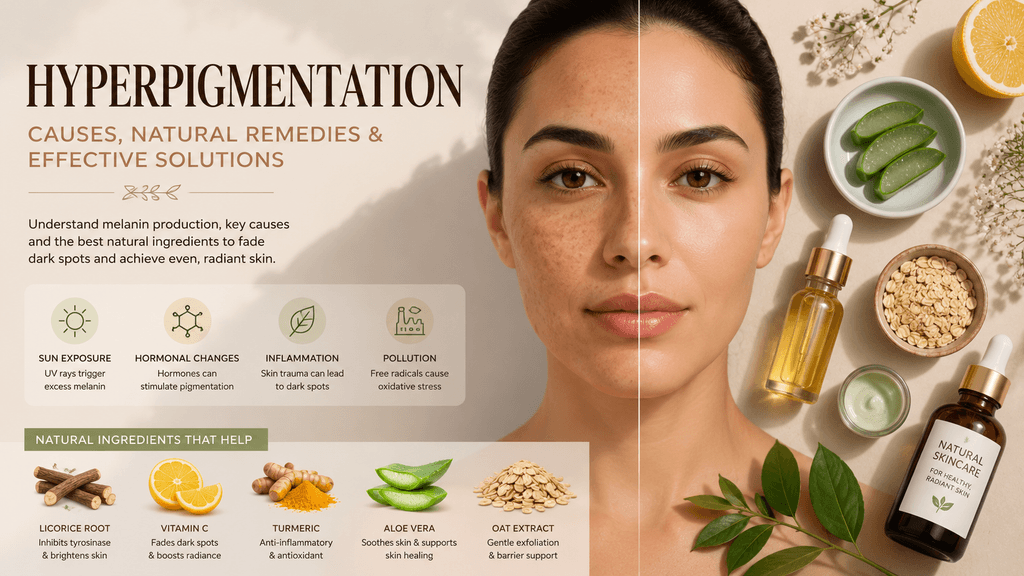
Uneven skin tone, persistent dark marks, and localized discoloration remain among the most widespread skin concerns worldwide. Many individuals across the United States seek effective ways to manage skin discoloration without relying on harsh synthetic bleaches or aggressive chemical interventions. While conventional treatments like high concentration hydroquinone or strong chemical peels offer rapid results, they often carry a high risk of irritation, rebound pigmentation, and barrier damage, especially for sensitive skin types.
Natural remedies for hyperpigmentation provide a gentler, sustainable approach by using targeted botanical extracts, antioxidant rich plant oils, and gentle natural exfoliants. By understanding the underlying biology of melanin production and applying proven natural ingredients, you can build an effective skincare routine that supports long term clarity and skin barrier health.
Understanding Hyperpigmentation and Melanin Production
Hyperpigmentation is not a single medical condition, but a broad term used to describe areas of skin that become darker than the surrounding tissue. This darkening occurs when the body produces an excess amount of melanin, the natural pigment responsible for skin, hair, and eye color.
The Role of Melanocytes in Skin Pigmentation
Specialized cells called melanocytes reside in the basal layer of the epidermis. Melanocytes produce pigment packages called melanosomes, which are transferred to neighboring skin cells called keratinocytes.
- The enzyme tyrosinase plays the primary role in triggering melanin production inside melanocytes.
- Exposure to ultraviolet radiation, systemic inflammation, or hormonal shifts signals tyrosinase to produce excess pigment.
- Once produced, melanosomes travel upward to the surface of the skin, resulting in visible dark spots and uneven patches.
The Primary Types of Hyperpigmentation
Different forms of hyperpigmentation develop through distinct pathways, and recognizing your specific type is essential for choosing the right natural remedies for hyperpigmentation.
- Post Inflammatory Hyperpigmentation occurs after skin trauma, such as acne breakouts, insect bites, or minor burns, leaving flat pink, red, brown, or black marks.
- Sun Spots, also known as solar lentigines or age spots, stem from accumulated ultraviolet exposure and typically appear on the face, hands, and shoulders.
- Melasma manifests as larger, symmetrical patches of dark skin, often triggered by hormonal fluctuations during pregnancy or hormonal therapy alongside sun exposure.
Key Causes of Excess Pigmentation
Addressing skin discoloration requires identifying and controlling the everyday triggers that cause melanocytes to overproduce pigment.
Sunlight and Ultraviolet Radiation
Ultraviolet A and Ultraviolet B rays are the single biggest cause of hyperpigmentation. Ultraviolet light penetrates the skin, stimulating melanin production as a defensive mechanism against DNA damage. Even minimal daily exposure without protection can deepen existing dark spots and trigger new ones.
Environmental Stressors and Pollution
Airborne pollutants, microscopic dust particles, and heavy metals generate free radicals on the surface of the skin. Free radicals create oxidative stress, which triggers cellular inflammation and prompts melanocytes to release extra pigment.
Systemic Hormonal Changes
Fluctuations in estrogen and progesterone alter the sensitivity of melanocytes, making them far more reactive to sunlight. This hormonal sensitivity is why melasma frequently develops during pregnancy or while using oral contraceptives.
Physical Trauma and Barrier Compromise
Aggressive skin scrubbing, popping pimples, using harsh chemical exfoliants, or applying irritating cosmetic formulas damages the protective skin barrier. When the barrier breaks down, inflammatory cascades signal melanocytes to flood the area with protective melanin.
Top Natural Ingredients That Fade Dark Spots
Botanical science has identified several potent natural extracts that effectively regulate melanin production, calm cellular inflammation, and speed up cellular turnover.
Botanical Tyrosinase Inhibitors
Tyrosinase inhibitors work by blocking the primary enzyme needed for melanin synthesis, preventing new dark spots from forming.
- Licorice Root Extract contains glabridin, a compound that slows down tyrosinase activity while providing strong anti inflammatory benefits.
- Bearberry Extract is a natural plant source of alpha arbutin, which gently lightens targeted discoloration without damaging surrounding tissue.
- Mulberry Leaf Extract delivers natural brightening activity that helps break down excess localized pigment over time.
Antioxidant and Vitamin Rich Brighteners
Antioxidants neutralize pigment triggering free radicals and support natural cell regeneration.
- Vitamin C, naturally found in Kakadu plum, acerola cherry, and rosehip extracts, brightens dark marks while boosting collagen synthesis.
- Niacinamide, a form of Vitamin B3 present in whole grains and legumes, prevents the transfer of melanosomes from melanocytes into visible skin cells.
- Turmeric contains curcumin, a powerful polyphenol that calms active skin inflammation and reduces dark spot severity.
Gentle Natural Exfoliants
Natural exfoliants dissolve the intercellular glue holding dull, pigmented cells to the surface, allowing fresher, clearer skin cells to rise to the top.
- Lactic Acid derived from fermented botanical sources offers gentle surface exfoliation while binding hydration to the skin barrier.
- Willow Bark Extract contains natural salicin, a mild precursor to salicylic acid that penetrates deep into pores to clear post acne marks.
- Fruit Enzymes from papaya and pineapple gently break down keratin proteins in dead skin cells without requiring physical abrasion.
Daily Morning Natural Routine for Clear Skin
A consistent morning routine focuses on neutralizing free radicals, calming inflammatory responses, and protecting your skin against environmental triggers throughout the day.
Step 1 Gentle Cleansing
Begin your morning with a mild, non foaming cleanser that removes overnight oil build up without stripping natural moisture. Look for creamy formulas containing colloidal oats, chamomile, or aloe vera leaf juice to soothe the skin barrier.
Step 2 Antioxidant Serum Application
Apply a lightweight brightening serum packed with natural Vitamin C, licorice root, or niacinamide to clean, slightly damp skin. Gently press the serum into your face and neck, allowing it to absorb completely before moving to the next step.
Step 3 Barrier Strengthening Moisturizer
Lock in hydration with a nutrient rich moisturizer containing plant based squalane, jojoba oil, or rosehip seed oil. A healthy skin barrier prevents future inflammatory reactions that lead to new post inflammatory hyperpigmentation.
Step 4 Non Nano Mineral Sun Protection
Finish your morning routine with a generous layer of broad spectrum mineral sunscreen containing non nano zinc oxide. Mineral sunscreens sit on top of the skin, reflecting harmful Ultraviolet A and Ultraviolet B rays away from your face before they can activate pigment producing enzymes.
Daily Evening Natural Routine for Skin Regeneration
Nighttime is when your skin focuses on repair and cellular regeneration. Your evening routine should deliver concentrated botanical active ingredients that repair damage and fade stubborn dark spots overnight.
Step 1 Thorough Cleansing
Remove environmental pollutants, sunscreen, and daily debris using an oil based cleanser or a gentle botanical micellar water, followed by a mild hydrating cleanser. Clean skin ensures optimal absorption of your nighttime treatments.
Step 2 Targeted Natural Exfoliation
Two or three nights per week, apply a gentle exfoliant featuring natural fruit enzymes, lactic acid, or willow bark extract. Exfoliation speeds up the shedding of hyperpigmented surface cells, allowing brightening treatments to penetrate deeper.
Step 3 Concentrated Brightening Treatment
On non exfoliation nights, apply a rich treatment serum containing higher concentrations of licorice root, bearberry extract, or botanical Vitamin C. Gently massage the formula into specific areas of discoloration or spread it across your entire face for an overall tone balancing effect.
Step 4 Nourishing Night Cream or Facial Oil
Seal in active ingredients with a rich night cream or a few drops of pure rosehip seed oil. Rosehip oil is naturally rich in essential fatty acids and Vitamin A, which accelerate cellular repair while you sleep.
Weekly At Home Natural Treatments for Hyperpigmentation
Adding targeted weekly treatments gives your daily routine an extra boost, helping lift stubborn discoloration more effectively.
Brightening Turmeric and Oat Mask
Mix one teaspoon of organic turmeric powder with two teaspoons of finely ground colloidal oats and enough pure aloe vera gel to form a smooth paste.
- Apply the mixture evenly across clean skin, avoiding the immediate eye area.
- Leave the mask on for ten to fifteen minutes while the calming compounds absorb.
- Rinse thoroughly with lukewarm water, using gentle circular motions to remove any temporary yellow tint.
Hydrating Honey and Papaya Enzyme Polish
Mash two tablespoons of fresh papaya flesh and combine it with one tablespoon of raw unpasteurized honey.
- Papaya contains natural papain enzymes that dissolve dead surface skin cells.
- Raw honey provides natural humectant hydration and antibacterial support.
- Smooth the mixture onto your face, let it rest for ten minutes, and rinse clean for immediate radiance.
Diet and Lifestyle Habits for Pigment Reduction
External treatments work best when supported by healthy internal habits that keep systemic inflammation low and boost your body’s natural defense against oxidative stress.
Eat Antioxidant Rich Foods
Incorporate colorful fruits and vegetables into your daily meals to supply your body with internal free radical protection.
- Berries such as blueberries, blackberries, and raspberries contain anthocyanins that protect skin cells from oxidative damage.
- Dark leafy greens like spinach and kale supply essential vitamins that promote skin repair.
- Tomatoes provide lycopene, a natural carotenoid that helps protect skin against sun damage from the inside out.
Maintain Consistent Hydration
Drinking adequate water throughout the day ensures optimal cellular function and helps your body flush out toxins efficiently. Proper hydration keeps skin cells plump, making discoloration less noticeable while supporting efficient nutrient transport.
Manage Chronic Stress Levels
Elevated cortisol levels caused by ongoing psychological stress trigger skin inflammation and disrupt hormonal balance, directly worsening conditions like melasma. Practice daily stress reduction through regular exercise, adequate sleep, and mindfulness practices.
Common Natural Skincare Mistakes to Avoid
Even natural ingredients can cause issues if used incorrectly or without proper care. Avoid these common mistakes when using natural remedies for hyperpigmentation.
Skipping Daily Sunscreen Application
Failing to apply broad spectrum sunscreen every single day, including cloudy days and time spent indoors near windows, undoes all the progress made by your brightening products. Ultraviolet light instantly reintroduces dark pigment into fading marks.
Over Exfoliating Sensitive Skin
Using natural exfoliants too frequently damages the skin barrier, creating chronic low grade inflammation. This inflammation prompts melanocytes to produce more pigment, resulting in worse discoloration than when you started.
Using Fresh Undiluted Lemon Juice
Applying raw lemon juice directly to the skin is a dangerous DIY trend. Lemon juice is extremely acidic, easily disrupting skin pH, and contains psoralens that cause severe phytophotodermatitis, a condition where sunlight creates deep, painful burns and intense hyperpigmentation.
Expecting Instant Overnight Results
Natural remedies for hyperpigmentation work in harmony with your skin natural twenty eight day cell turnover cycle. Expecting complete spot removal within a few days leads to overuse of active ingredients and unnecessary skin irritation.
Regional Considerations Across the United States
Geographic factors across various regions of the United States significantly influence how hyperpigmentation develops and how natural remedies perform.
Sun Exposure in Southern and Western States
Residents in sunny regions like California, Texas, Florida, and Arizona face intense daily solar radiation throughout the year.
- High UV index levels mean melanin synthesis is constantly active.
- Individuals in these states require rigorous daily application of non nano mineral sunscreens.
- Formulations rich in antioxidant plant extracts help neutralize persistent solar radiation.
Humidity and Temperature Variations in Eastern States
Living in regions with distinct seasonal shifts, such as New York or Illinois, creates changing skincare needs between hot summers and freezing winters.
- Humid summers call for lightweight serum delivery systems for licorice root and Vitamin C.
- Dry, cold winters require richer cream bases packed with rosehip oil and jojoba oil to prevent barrier cracking and subsequent post inflammatory pigment.
Frequently Asked Questions
How long do natural remedies for hyperpigmentation take to work?
Most individuals begin noticing preliminary improvements in overall skin radiance within four to six weeks of consistent daily use. Significant fading of deep post inflammatory marks or solar spots typically requires eight to twelve weeks, aligning with multiple natural cellular turnover cycles.
Can natural ingredients completely cure melasma?
Natural remedies for hyperpigmentation can significantly fade melasma patches and keep them managed. However, because melasma is tied to internal hormonal fluctuations and heat exposure, maintaining results requires ongoing sun protection and stress management.
Is rosehip oil suitable for acne prone skin with dark spots?
Yes, rosehip seed oil is lightweight and non comedogenic, meaning it will not clog pores. It contains high levels of linoleic acid, an essential fatty acid that acne prone skin often lacks, making it ideal for fading post acne marks safely.
Why does hyperpigmentation look darker before it fades?
As hyperpigmented cells move from the deeper epidermal layers up toward the surface through natural cell turnover, they can temporarily appear darker and more concentrated before shedding away completely.
Are natural remedies safer than hydroquinone for long term use?
Yes, natural remedies for hyperpigmentation like licorice root, niacinamide, and bearberry extract are non toxic and safe for long term daily maintenance, whereas synthetic hydroquinone can cause blue black pigment buildup known as ochronosis if used for extended periods.
Summary of Natural Hyperpigmentation Care
Managing dark spots successfully requires patience, consistency, and a gentle approach that respects your skin barrier.
- Identify your specific type of hyperpigmentation to select the most effective botanical extracts.
- Use proven natural tyrosinase inhibitors like licorice root and bearberry to stop pigment creation.
- Exfoliate gently using natural fruit enzymes or lactic acid to clear discolored surface cells.
- Protect your skin every day with a broad spectrum mineral sunscreen containing non nano zinc oxide.
- Support your skincare routine with antioxidant rich nutrition, proper hydration, and adequate sleep.