

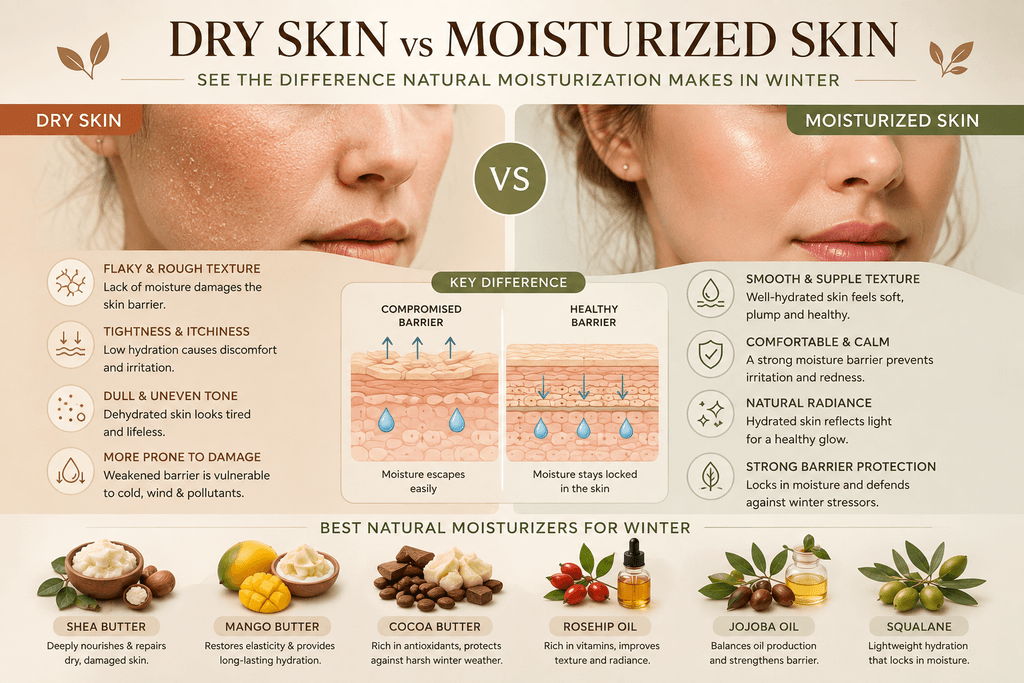
Winter weather brings crisp air, low humidity, and harsh freezing winds that take a heavy toll on human skin. During cold months, the protective epidermal barrier loses essential water rapidly through transepidermal water loss. Indoor heating systems further exacerbate the issue by stripping moisture from the ambient air, leaving your face feeling tight, flaky, itchy, and irritated.
Many commercial lotions rely on synthetic petroleum derivatives, artificial silicones, and heavy fragrances that merely sit on top of the skin without delivering actual cellular nutrients. Switching to the best natural moisturizers for dry skin in winter ensures your skin receives rich essential fatty acids, plant derived lipids, and potent botanical antioxidants that repair the moisture barrier from within.
Why Winter Weather Dries Out Your Skin
Understanding why cold air causes extreme dryness is the first step toward building an effective winter hydration strategy.
The Breakdown of the Skin Lipid Barrier
The outer layer of your skin, called the stratum corneum, consists of skin cells bound together by natural lipids, ceramides, and cholesterol.
- Cold outdoor air holds far less moisture than warm air, creating a dramatic humidity drop.
- Freezing temperatures cause blood vessels near the surface to constrict, reducing nutrient flow to skin tissue.
- Low environmental moisture pulls water directly out of your skin, causing microscopic cracks in the lipid barrier.
- Damaged barriers allow environmental irritants to enter easily, triggering low grade inflammation and persistent flaking.
Indoor Heating and Environmental Stress
Moving back and forth between freezing outdoor air and warm indoor heating subjects your skin to sudden temperature shifts. Forced air heating lowers indoor humidity levels down to single digit percentages, drawing surface water out continuously throughout the day and night.
Top Natural Butters for Severe Winter Dryness
Plant based butters provide intense emollient benefits by creating a protective breathable shield that locks in moisture and guards against cold air.
Raw Shea Butter
Extracted from the nuts of the African shea tree, raw shea butter is one of the most powerful natural emollients available.
- High concentrations of stearic and oleic fatty acids help rebuild damaged barrier tissue.
- Natural Vitamin A and Vitamin E promote cell regeneration and calm winter redness.
- It forms a smooth protective seal over rough patches without clogging facial pores.
Mango Butter
Derived from mango fruit seeds, mango butter offers a lighter texture than shea butter while delivering exceptional moisture.
- Packed with essential fatty acids that restore skin elasticity during cold spells.
- Rich in antioxidants that shield skin cells from environmental oxidative stress.
- Melts effortlessly into the skin, making it ideal for daily morning application.
Cocoa Butter
Obtained from cacao beans, cocoa butter delivers dense hydration suited for extremely dry, cracked areas.
- High polyphenol content helps calm visible skin inflammation and rough texture.
- Provides long lasting hydration that protects vulnerable skin against freezing windburn.
- Ideal for rich night creams and heavy body moisture treatments.
Powerful Plant Oils for Winter Moisture Lock
Natural plant oils supply vital lipids that mimic your skin natural sebum, reinforcing barrier function without leaving a heavy residual film.
Rosehip Seed Oil
Cold pressed rosehip seed oil is a lightweight yet deeply nourishing oil rich in essential linoleic acid.
- High natural Vitamin A content supports cell turnover without causing peeling.
- Absorbs quickly to relieve tightness and restore natural radiance to dull winter skin.
- Helps fade dark marks left behind by winter breakouts or dry skin irritations.
Jojoba Oil
Technically a liquid wax ester, jojoba oil closely resembles the natural oil produced by human sebaceous glands.
- Balances moisture levels across normal, dry, and combination winter skin types.
- Penetrates deeply into surface layers to soothe flaking and rough patches.
- Strengthens the natural lipid matrix to prevent continuous water loss.
Plant Derived Squalane
Sourced naturally from olives or sugarcane, squalane delivers weightless moisture restoration.
- Provides deep hydration suitable for reactive, sensitive, and dry winter skin.
- Non comedogenic properties ensure pores remain clear while receiving rich moisture.
- Easily layers underneath heavier creams or over water based hydrating serums.
Argan Oil
Harvested from Moroccan argan tree kernels, argan oil is famed for its rich nutritional profile.
- Abundant Vitamin E content neutralizes free radicals caused by winter weather.
- Omega six fatty acids restore softness and flexibility to compromised skin barriers.
- Improves overall texture and reduces visible flaking across dry facial zones.
Crucial Hydrating Botanical Ingredients
The best natural moisturizers for dry skin in winter pair lipid rich oils with water binding humectants and soothing botanical extracts.
Colloidal Oatmeal
Finely ground oat kernel flour has a long history of therapeutic use for compromised skin.
- Contains beta glucans that bind water to the surface layers of the skin.
- Calms intense winter itching, redness, and inflammation rapidly upon application.
- Forms a delicate film that protects raw, chapped areas from cold winds.
Plant Derived Glycerin
Vegetable glycerin acts as an exceptionally effective natural humectant.
- Draws moisture from deeper skin tissue and surrounding air straight into the epidermis.
- Keeps skin cells plump, flexible, and resilient against cracking.
- Works synergistically with plant oils to maintain day long moisture retention.
Aloe Vera Leaf Juice
Pure aloe vera supplies rich water based hydration packed with essential minerals and vitamins.
- Cools windburned, reactive skin and reduces localized surface heat.
- Delivers essential water molecules directly to dehydrated skin cells.
- Prepares the skin surface to absorb heavier oils and cream moisturizers effectively.
Complete Daily Winter Skincare Routine
Following a structured daily routine ensures your skin receives water based hydration, lipid replenishment, and outer barrier protection.
Morning Hydration Routine
- Wash your face with a mild, non foaming cream cleanser containing chamomile or aloe vera.
- Spritz clean skin with a hydrating botanical mist or apply an aloe based serum.
- Massage a generous amount of a rich natural cream featuring shea butter or squalane.
- Apply a broad spectrum mineral sunscreen containing non nano zinc oxide as the final step.
Evening Repair Routine
- Cleanse thoroughly using a natural plant oil cleanser to dissolve daily buildup and sunscreen.
- Apply a second gentle hydrating wash to ensure pores are completely clear.
- Smooth a concentrated hydration serum containing plant derived glycerin across your face.
- Apply a rich night cream or warm a few drops of rosehip seed oil between your palms and press onto your face.
Weekly At Home Winter Moisture Masks
Adding weekly natural treatment masks provides concentrated nourishment to heal severe dryness and restore skin glow.
Soothing Oat and Honey Repair Mask
Mix two tablespoons of colloidal oatmeal with one tablespoon of raw honey and one tablespoon of pure aloe vera gel.
- Raw honey draws moisture deep into dry tissue while providing antibacterial support.
- Colloidal oatmeal soothes irritation and restores barrier comfort.
- Leave the mixture on clean skin for fifteen minutes, then rinse gently with lukewarm water.
Avocado and Rosehip Nourishing Mask
Mash half a ripe avocado and mix it with one teaspoon of rosehip seed oil and half a teaspoon of vegetable glycerin.
- Avocado provides dense essential fatty acids that soften dry, rough patches.
- Rosehip oil delivers natural antioxidants to revive dull winter skin tones.
- Smooth over your face, let sit for twenty minutes, and wipe away clean with a damp cloth.
Essential Lifestyle Adjustments for Winter Skin
External products work best when paired with internal habits that support hydration and shield skin against environmental drops.
Use a Cool Mist Humidifier
Running a cool mist humidifier in your bedroom replaces moisture lost to forced air heating systems. Maintaining indoor humidity between forty and fifty percent prevents overnight moisture loss from your skin.
Lower Shower Water Temperature
While hot baths and showers feel comforting during winter, hot water strips away essential natural lipids rapidly. Wash your face and body with lukewarm water to preserve natural protective surface oils.
Increase Dietary Omega Fatty Acids
Nourish your skin barrier from the inside by consuming foods rich in essential fatty acids.
- Walnuts, flaxseeds, and chia seeds supply plant based omega three fats.
- Avocados and extra virgin olive oil deliver healthy monounsaturated lipids.
- Ample daily water intake keeps internal skin tissue properly hydrated.
Common Winter Moisturizing Mistakes to Avoid
Steer clear of these common habits that can accidentally worsen winter dryness and damage your skin barrier.
Applying Oils to Completely Dry Skin
Facial oils are occlusives, meaning they lock in existing moisture rather than creating water themselves. Applying oil to dry skin traps dryness underneath. Always apply natural facial oils over damp skin or water based serums.
Over Exfoliating Flaky Skin
Scrubbing away dry flakes with harsh physical scrubs creates microscopic tears and increases inflammation. Use gentle fruit enzymes or mild lactic acid once per week instead of aggressive scrubs.
Skipping Sunscreen on Overcast Days
Ultraviolet A rays penetrate cloud cover and reflect off snow throughout winter months. Failing to wear daily mineral sunscreen allows solar radiation to break down collagen and weaken barrier resilience.
Regional Winter Skincare Needs Across the United States
Different regions across the United States present unique winter environmental challenges that alter hydration requirements.
Northern and Midwestern States
States like Minnesota, Illinois, and New York face severe freezing temperatures, biting winds, and heavy indoor heating.
- Require dense moisture creams featuring raw shea butter and rich plant waxes.
- Layering water based humectants beneath heavy oil occlusives is essential to prevent severe chapping.
Southern and Western States
Regions like California, Texas, and Florida experience milder winters with variable humidity and ongoing strong sunlight.
- Prefer lightweight natural moisturizers like squalane or jojoba oil based lotions.
- Daily application of broad spectrum mineral sunscreen remains a top priority year round.
Frequently Asked Questions
Which natural oil is best for extremely dry skin in winter?
Rosehip seed oil and argan oil are exceptionally effective for dry winter skin. Rosehip seed oil delivers essential linoleic acid and Vitamin A for repair, while argan oil supplies dense Vitamin E and fatty acids to soothe rough patches.
Can natural moisturizers clog my pores during winter?
Not if you choose non comedogenic plant options. Ingredients like squalane, jojoba oil, and rosehip seed oil absorb easily without clogging pores, whereas overly heavy synthetic formulas can trap debris.
How often should I apply natural moisturizer in winter?
Apply your natural moisturizer twice daily, during your morning and evening routines. If you spend extended time outdoors in cold winds, reapply a light layer of barrier cream or oil as needed.
Is shea butter better than lotion for dry winter skin?
Raw shea butter is superior for sealing severely cracked or windburned skin because it forms a thick protective barrier. However, combining water based hydration with shea butter yields the best results for overall face care.
Why does my skin still feel dry after moisturizing?
If your skin feels dry despite moisturizing, your natural skin barrier may be compromised, or you may be applying oil without first applying water based hydration. Apply humectants like aloe or glycerin to damp skin before sealing with cream or oil.
Summary of Winter Skin Hydration
Protecting your skin throughout cold winter months requires consistent barrier support, rich natural ingredients, and protective habits.
- Choose the best natural moisturizers for dry skin in winter containing rich plant butters like shea and mango butter.
- Seal in deep moisture using barrier repairing oils like rosehip, jojoba, and plant derived squalane.
- Apply natural moisturizers to damp skin immediately after cleansing to trap water molecules effectively.
- Run indoor humidifiers and avoid hot water to protect your natural surface lipids.
- Protect your face daily with broad spectrum mineral sunscreen regardless of cloud cover.