

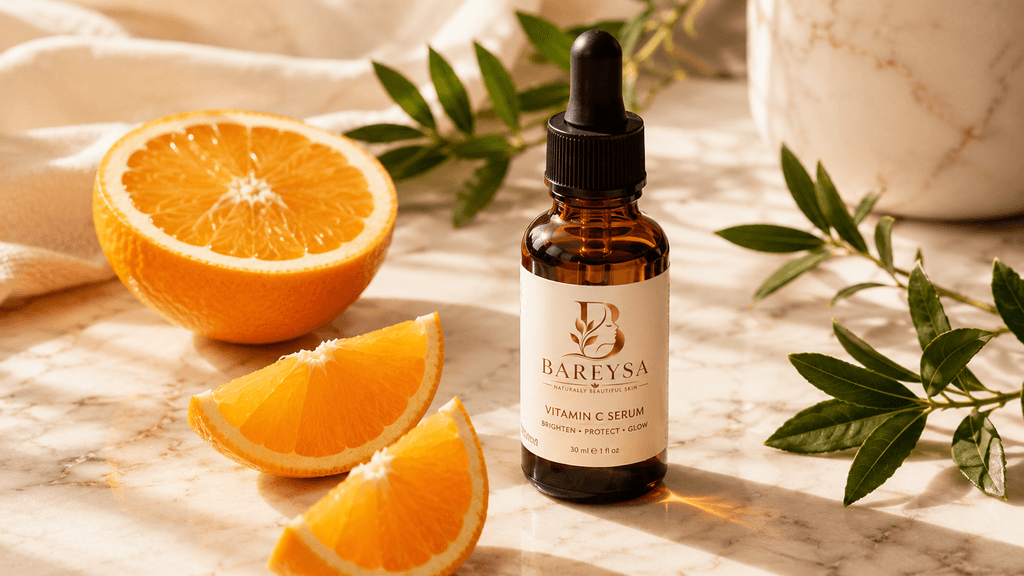
Vitamin C for skin works by neutralizing free radicals, fading dark spots, boosting collagen production, and protecting your face from daily damage caused by sun exposure and pollution. Used consistently, usually once a day in the morning, it can visibly even out your skin tone and add a healthy glow within just a few weeks. If you have ever wondered why so many skincare products start with this one ingredient, the answer is simple: very few actives do this much for your skin with this little effort.
Let us break down everything you actually need to know about using vitamin C for skin, what it does, how to apply it correctly, what to avoid mixing it with, and how to pick the right product for your skin type.
What Is Vitamin C for Skin, Exactly?
When people talk about vitamin C for skin, they usually mean a topical serum built around L ascorbic acid (or one of its gentler derivatives) suspended in a lightweight liquid base. Unlike heavy creams that sit on top of the skin, a serum is designed to absorb quickly and deliver a concentrated dose of active ingredient directly into the upper layers of your skin.
The idea behind using vitamin C for skin is not new, it is one of the most researched antioxidants in dermatology. Your skin naturally has some antioxidant defense on its own, but daily exposure to sunlight, pollution, and blue light from screens slowly wears that defense down. Applying vitamin C for skin essentially tops up what your skin loses every day, and pairing it with a good organic skincare routine for glowing skin can noticeably speed up how quickly you see results.
What Does Vitamin C Do for Skin?
This is the question most people search for, and the honest answer is: quite a lot. Here is what is actually happening beneath the surface when you apply it.
It Neutralizes Free Radicals
Free radicals are unstable molecules created by UV rays, smoke, and pollution. They damage skin cells and speed up visible aging, think fine lines, sagging, and dullness. Vitamin C is a powerful antioxidant, meaning it mops up these free radicals before they can cause damage. This is the main reason dermatologists recommend using vitamin C for skin in the morning, right before sunscreen. If your skin barrier is already compromised, it is worth reading up on how to repair a damaged skin barrier before introducing new actives.
It Brightens and Evens Out Skin Tone
Vitamin C inhibits an enzyme called tyrosinase, which your skin uses to produce melanin (the pigment responsible for dark spots and uneven tone). Less excess melanin means fewer dark patches and a more even, radiant complexion over time. If uneven tone is your main concern, our guide on how to reduce hyperpigmentation naturally pairs well with a daily vitamin C routine.
It Boosts Collagen Production
Collagen is the protein that keeps skin firm and plump. Vitamin C plays a direct role in collagen synthesis, without it, your skin physically cannot produce new collagen properly. This is why consistent use is linked to smoother texture and a slight firming effect over several weeks, which is also why it is often recommended alongside anti aging serums for wrinkles for a more complete anti aging routine.
It Fades Dark Spots and Hyperpigmentation
Whether it is acne scars, sun spots, or post inflammatory marks, vitamin C works gradually to fade discoloration by reducing melanin buildup at the source rather than just masking it. For a deeper dive into targeted options, check out these natural remedies for dark spots and natural remedies for hyperpigmentation, or explore a dedicated hyperpigmentation treatment if your marks are more stubborn.
It Adds a Healthy, Hydrated Glow
Good vitamin C formulas are often paired with hydrating ingredients like hyaluronic acid, which plump the skin and enhance that lit from within glow people associate with healthy skin.
Key Benefits of Vitamin C for Skin at a Glance
- Brighter, more even complexion
- Fewer visible dark spots and less redness
- Smoother, softer texture
- Better resilience against sun and pollution damage
- A subtle plumping effect from improved collagen support
Nothing dramatic happens overnight, vitamin C is a slow and steady ingredient, not a quick fix. But patience here genuinely pays off.
How to Use Vitamin C for Skin the Right Way
Getting the technique right matters just as much as the product itself. If you enjoy a more structured, multi step approach, vitamin C also fits naturally into a Korean skincare routine, which layers lightweight actives before sealing everything in with a moisturizer.
Step by Step Morning Routine
- Cleanse your face with a gentle, non stripping cleanser.
- Pat skin dry, do not apply serum to soaking wet skin, as this dilutes its concentration.
- Apply 3 to 5 drops of your vitamin C serum evenly across your face and neck.
- Wait 60 seconds to let it absorb before layering anything else.
- Follow with moisturizer to lock in hydration.
- Finish with SPF, this step is not optional, since vitamin C works best alongside sun protection, not instead of it.
How Much Should You Use?
A little goes a long way. Three to five drops is enough for the entire face, using more does not speed up results, it just wastes product and can increase the chance of irritation, especially for sensitive skin.
How to Choose the Right Vitamin C for Skin
Not all vitamin C products are created equal. Here is what actually matters when picking one.
Concentration Matters
Most effective serums sit between 10% and 20% vitamin C. Higher is not always better, concentrations above 20% often increase irritation without adding meaningfully more benefit.
Look for Supporting Ingredients
Ingredients like vitamin E and ferulic acid help stabilize vitamin C and boost its antioxidant power. Hyaluronic acid adds hydration, while a good niacinamide serum can help calm and even out tone alongside it.
Packaging Matters More Than You Would Think
Because vitamin C degrades in light and air, the best products come in dark, opaque, air restricted bottles like pump dispensers, rather than clear jars or droppers that expose the product to air every time you use it.
Match It to Your Skin Type
Oily or acne prone skin often does well with lightweight, water based vitamin C formulas. Pairing it with the right organic skincare products for acne prone skin can help control breakouts while still brightening tone, and can also support your efforts if you are trying to get rid of blackheads.
Dry skin benefits from serums that include added hydrating ingredients like hyaluronic acid or glycerin, ideally followed up with one of these natural moisturizers for dry skin to lock in moisture.
Sensitive skin should look for gentler derivatives of vitamin C, such as sodium ascorbyl phosphate, rather than pure L ascorbic acid, which can be more likely to cause irritation. A calmer, simplified organic skincare routine for sensitive skin using the right organic skincare products for sensitive skin will help your skin tolerate vitamin C much better.
A quick patch test before applying any new active across your full face is always a smart move, and if you have persistent skin concerns, a chat with a dermatologist never hurts.
Frequently Asked Questions About Vitamin C for Skin
Can I use vitamin C face serum every day?
Yes. For most skin types, using vitamin C for skin daily is safe and effective, typically applied once a day in the morning. Daily use lets the antioxidant protection build up consistently, which is exactly how it is meant to work. If you have sensitive or reactive skin, start with every other day for the first one to two weeks before moving to daily use.
How often should I put vitamin C on my face?
Once a day is the standard, most recommended frequency, applied in the morning after cleansing and before moisturizer and sunscreen. Some resilient skin types tolerate twice daily use, but for most people, morning only application is both effective and gentler on the skin barrier long term.
How long does it take for vitamin C serum to work?
Most people notice a subtle glow and brighter skin within 2 to 4 weeks of daily use. Visible fading of dark spots and more even tone usually takes 6 to 12 weeks, since skin cell turnover and pigment reduction happen gradually. Full collagen related benefits, like improved firmness, can take up to 3 months to show.
What will happen if I use vitamin C serum daily?
With consistent daily use over 4 to 12 weeks, most people notice a brighter and more even complexion, fewer dark spots, smoother texture, stronger defense against sun and pollution damage, and a subtle plumping effect from improved collagen support. Results build gradually rather than appearing overnight.
What will happen if I apply vitamin C serum every day, but skip sunscreen?
You will lose a large part of the benefit. Vitamin C for skin works best as a partner to sunscreen, not a replacement for it, the antioxidant protection supports your skin’s defenses, but SPF is still what actively blocks UV rays. Skipping sunscreen while relying only on vitamin C leaves your skin exposed to the very damage the serum is meant to help fight.
Is vitamin C better or hyaluronic acid?
They are not competitors, they solve different problems. Vitamin C is an antioxidant that brightens skin, fades pigmentation, and protects against environmental stress. Hyaluronic acid is a hydrating ingredient that draws moisture into the skin, plumping it and softening the look of fine lines caused by dehydration. Many people use both together, vitamin C first, then hyaluronic acid to seal in hydration.
Can I leave vitamin C serum overnight?
Yes, you can. Vitamin C is not harmful to leave on overnight, and some people prefer a night routine, especially if their skin does not tolerate layering it under sunscreen and makeup. There is no rule against overnight use, it simply will not get the shield against daytime damage benefit that morning application offers.
What is the best time to apply vitamin C?
Morning is generally considered ideal. Vitamin C’s antioxidant properties work best when actively defending your skin against the free radicals generated by daytime UV exposure and pollution. Applying it in the morning and following up with sunscreen creates a one two punch of protection.
Why no vitamin C at night?
There is not a strict reason to avoid vitamin C at night, this is more of a popular guideline than a hard rule. The main argument for skipping it at night is that its antioxidant protection is most useful during the day, while nighttime routines are often reserved for repair focused ingredients like retinol. If your skin tolerates it well, using vitamin C at night is not unsafe, it is simply less strategically timed.
What should you not mix with vitamin C serum?
The main ones to be careful with are retinol and strong exfoliating acids, like glycolic or salicylic acid. Layering these together in the same routine can increase irritation, redness, and sensitivity, especially for beginners. A common approach is vitamin C in the morning, retinol or acids at night, so you get the benefits of both without overwhelming your skin barrier. If you would still like to introduce retinol carefully, our guide on retinol for sensitive skin explains how to do it without irritation, and if exfoliation is your goal, it is worth understanding the salicylic acid benefits before combining it with vitamin C. Niacinamide, despite an old myth, is generally safe to use alongside vitamin C.
Which is better, retinol or vitamin C?
It depends on what your skin needs. Choose vitamin C if your main concerns are dullness, uneven tone, dark spots, and daily environmental protection. Choose retinol if you are focused on fine lines, deeper wrinkles, acne, and overall cell turnover. Many effective routines use both, vitamin C by day, retinol by night, so it is less about choosing one permanently and more about using each at the right time.
Is there any downside to vitamin C serum?
For most people, using vitamin C for skin is well tolerated, but a few things are worth knowing. Mild tingling or slight redness can occur initially, especially with higher concentrations, and usually settles as skin adjusts. Oxidation is also a real issue, vitamin C serums can turn yellow or brown over time when exposed to air and light, which reduces effectiveness, so always check the color and smell before using an older bottle. Sensitive skin types may need to start with every other day use rather than daily.
What are the mistakes people make while using vitamin C serum?
The most common ones are skipping sunscreen, using too much product thinking it speeds up results, storing the bottle in sunlight or heat, which breaks down the active ingredient, layering it with strong acids or retinol at the same time, expecting overnight results and giving up too early, and applying it to wet or damp skin, which dilutes the formula.
Which brand of vitamin C serum is most effective?
Effectiveness depends less on the brand name and more on the formulation, concentration, supporting ingredients like vitamin E and ferulic acid, and proper opaque packaging all matter more than marketing. Look for transparent ingredient lists and stable, well packaged formulas rather than choosing based on branding alone.
Which vitamin C do dermatologists recommend?
Many dermatologists recommend formulas with 10 to 20 percent L ascorbic acid paired with vitamin E and ferulic acid for stability, since this combination is well studied and effective for most skin types. For sensitive skin, gentler derivatives like sodium ascorbyl phosphate are often suggested instead, as they deliver similar benefits with a lower risk of irritation.
Final Thoughts
Vitamin C for skin has earned its spot as a skincare staple for a good reason, it brightens, protects, and gently repairs skin over time, all without needing a complicated routine. The real secret is not finding some miracle formula, it is using a good one consistently, applying it correctly, and pairing it with sunscreen every single morning.
Give it a few weeks of consistent use, and you will likely understand exactly why this one small step makes such a noticeable difference.