

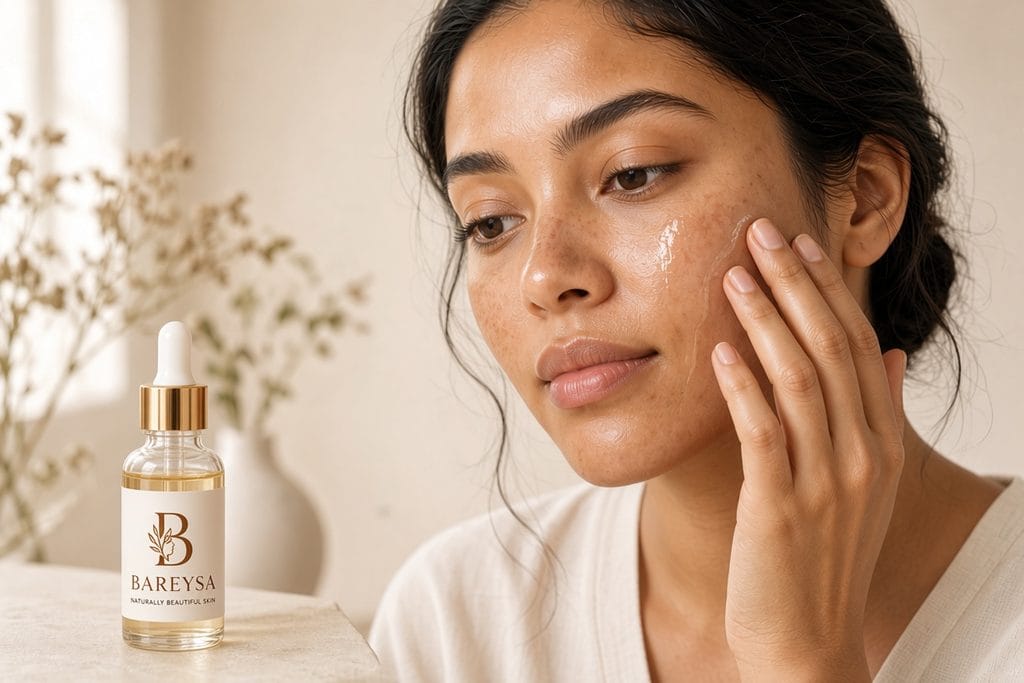
The most effective hyperpigmentation treatment combines daily broad-spectrum sunscreen with targeted skincare ingredients such as niacinamide, vitamin C, azelaic acid, retinoids, or other pigment-reducing ingredients, depending on your skin type and the cause of the pigmentation. Consistency is essential because dark spots usually fade gradually rather than disappearing overnight. A gentle skincare routine can help prevent new pigmentation while improving the appearance of existing dark spots, acne marks, sun spots, and uneven skin tone.
Hyperpigmentation is one of the most common skin concerns. It can appear after acne, prolonged sun exposure, hormonal changes, skin irritation, inflammation, or certain medications. Some people notice small brown spots after pimples, while others develop larger patches across the cheeks, forehead, upper lip, or other areas of the face.
The good news is that pigmentation can often be improved with the right combination of prevention, gentle skincare, and targeted ingredients. The important part is understanding what is causing the pigmentation before choosing an aggressive treatment.
If your skin is also prone to breakouts, choosing the right products becomes especially important. Our guide to organic skincare products for acne-prone skin can help you build a routine that supports clearer skin without unnecessarily irritating the skin barrier.
What Is Hyperpigmentation?
Hyperpigmentation occurs when certain areas of the skin produce or retain more melanin than surrounding skin. Melanin is the pigment responsible for skin, hair, and eye color. When melanin production increases in a particular area, that area can appear darker than the surrounding skin.
Hyperpigmentation can affect people with every skin tone, but darker skin tones can be more susceptible to noticeable pigmentation following inflammation or injury.
The appearance of pigmentation can vary significantly. It may look like:
- Small brown or dark marks
- Red-brown or purple-brown marks after acne
- Sun spots
- Larger patches of discoloration
- Uneven skin tone
- Darkened areas around the mouth
- Dark spots on the forehead or cheeks
- Post-inflammatory pigmentation
Understanding the type of pigmentation is important because different causes may respond differently to skincare.
What Causes Hyperpigmentation?
Hyperpigmentation can have several causes. Identifying the trigger is one of the most important parts of effective treatment.
Sun Exposure
Ultraviolet radiation is one of the biggest contributors to pigmentation. Sun exposure stimulates melanin production and can make existing dark spots more noticeable.
Even if you are already treating pigmentation, frequent unprotected sun exposure can make progress much slower.
This is why sunscreen is not simply an additional skincare product. It is a central part of any hyperpigmentation treatment routine.
Acne and Skin Inflammation
Pimples can leave dark marks after they heal. This is commonly called post-inflammatory hyperpigmentation.
Picking, squeezing, or repeatedly irritating pimples can increase inflammation and potentially make the resulting marks darker.
People with acne-prone skin should therefore address both active breakouts and pigmentation rather than focusing exclusively on dark spots.
Hormonal Changes
Hormonal changes can contribute to melasma, a type of pigmentation that commonly appears as larger brown or gray-brown patches.
Melasma often develops on areas that receive sunlight, particularly the cheeks, forehead, nose, and upper lip.
Because hormonal pigmentation can be persistent, professional evaluation may be useful when pigmentation is widespread, recurrent, or difficult to control.
Skin Irritation
Harsh exfoliation, excessive scrubbing, unsuitable products, and damaged skin barriers can trigger inflammation. In some people, inflammation can lead to additional pigmentation.
This is particularly important for sensitive skin.
A stronger product is not always a better product. If an ingredient causes significant burning, redness, peeling, or inflammation, it may ultimately make pigmentation more difficult to manage.
Picking at the Skin
Repeatedly touching or picking pimples, scabs, or irritated areas can prolong inflammation.
Allowing the skin to heal naturally and using gentle products can reduce the risk of additional marks.
Different Types of Hyperpigmentation
Not every dark spot is the same. Your skincare approach should reflect the type and cause of pigmentation.
Post-Inflammatory Hyperpigmentation
Post-inflammatory hyperpigmentation develops after inflammation or injury to the skin.
Common triggers include:
- Acne
- Pimples
- Cuts
- Burns
- Insect bites
- Aggressive cosmetic procedures
- Skin irritation
The discoloration can remain after the original problem has disappeared.
Sun Spots
Sun spots are associated with cumulative ultraviolet exposure and commonly appear on areas such as the face, hands, shoulders, and arms.
Consistent sunscreen use is especially important for people who are prone to sun-induced pigmentation.
Melasma
Melasma usually appears as larger patches rather than isolated spots. It can be influenced by hormonal changes and ultraviolet exposure.
Melasma can be challenging to manage and may require a combination of sun protection, topical treatments, and professional care.
Acne Marks
Acne marks can appear brown, gray, or sometimes red depending on the person’s skin tone and the type of post-acne discoloration.
Treating acne itself is important because continuous breakouts can create new marks while older ones are fading.
Best Ingredients for Hyperpigmentation Treatment
The right ingredient can make a significant difference, but using too many active ingredients at the same time can irritate the skin.
Niacinamide
Niacinamide is a form of vitamin B3 that is widely used in skincare.
It can support the skin barrier and help improve the appearance of uneven skin tone. It is also often suitable for people who want a relatively gentle ingredient.
You can learn more about this ingredient in our detailed guide to niacinamide serum benefits.
How to Use Niacinamide
Niacinamide can generally be used after cleansing and before moisturizer.
A simple routine could be:
- Cleanse the face gently.
- Apply niacinamide serum.
- Apply moisturizer.
- Apply sunscreen during the morning.
If you have sensitive skin, introduce it gradually rather than adding several new products at once.
Vitamin C
Vitamin C is an antioxidant commonly included in routines designed to improve dullness and uneven skin tone.
It can also provide antioxidant support against environmental stressors.
How to Use Vitamin C
Vitamin C is commonly used in the morning after cleansing.
Follow it with moisturizer and sunscreen.
If you have sensitive skin, begin with a lower-strength formula and monitor how your skin responds.
Azelaic Acid
Azelaic acid is another useful ingredient for uneven skin tone, especially for people who also experience acne or inflammatory skin concerns.
It can be a useful option when you want to address multiple concerns with one ingredient.
How to Use Azelaic Acid
Apply it according to the product instructions, usually after cleansing and before moisturizer.
Start slowly if your skin is sensitive.
Retinoids
Retinoids support skin cell turnover and are commonly used for acne, signs of aging, and uneven skin tone.
However, retinoids can cause dryness, peeling, or irritation, especially when first introduced.
If your skin is sensitive, our guide on retinol for sensitive skin provides additional guidance.
How to Use Retinoids
Retinoids are generally used at night.
A beginner routine may involve using a retinoid only a few nights per week before gradually increasing frequency if your skin tolerates it.
Avoid combining multiple strong exfoliating or active products immediately when starting a retinoid.
Salicylic Acid
Salicylic acid is a beta hydroxy acid commonly used for clogged pores and acne-prone skin.
By helping manage breakouts, it may indirectly help reduce the formation of new post-acne marks.
You can read more about the ingredient in our guide to salicylic acid benefits.
Alpha Hydroxy Acids
Alpha hydroxy acids such as glycolic acid and lactic acid can help exfoliate the surface of the skin.
They may improve the appearance of dullness and uneven tone when used correctly.
However, excessive exfoliation can cause irritation, which may worsen pigmentation.
Sunscreen
Sunscreen is one of the most important parts of any pigmentation routine.
Without adequate sun protection, ultraviolet exposure can stimulate additional melanin production and make existing pigmentation more difficult to fade.
Choose a broad-spectrum sunscreen and apply it consistently during the day.
Step-by-Step Morning Routine for Hyperpigmentation
A simple routine is usually more sustainable than a complicated routine with many active ingredients.
Step 1: Gentle Cleanser
Start with a gentle cleanser that removes sweat, excess oil, sunscreen residue, and impurities without leaving the skin feeling excessively tight.
Avoid aggressive scrubbing.
Step 2: Antioxidant or Pigment-Focused Serum
Depending on your skin type, you can use an ingredient such as vitamin C or niacinamide.
Do not feel pressured to use multiple serums.
One well-tolerated active ingredient can be more useful than several irritating products.
Step 3: Moisturizer
Apply a moisturizer that supports the skin barrier.
If your skin is dry, look for ingredients that help maintain hydration.
For more ideas, explore our guide to natural moisturizers for dry skin.
Step 4: Sunscreen
Finish your morning routine with broad-spectrum sunscreen.
Apply enough to provide meaningful protection and reapply according to your exposure and the sunscreen’s instructions.
If you spend significant time outdoors, additional protective measures such as shade, hats, and protective clothing can also help.
Step-by-Step Night Routine for Hyperpigmentation
Nighttime is an opportunity to use targeted treatments while supporting skin recovery.
Step 1: Remove Sunscreen and Makeup
If you wear makeup or water-resistant sunscreen, remove it thoroughly but gently.
Avoid repeatedly rubbing the skin.
Step 2: Cleanse
Use a gentle cleanser suited to your skin type.
Very dry or sensitive skin generally benefits from avoiding harsh cleansing.
Step 3: Treatment Ingredient
Choose one primary treatment ingredient based on your skin needs.
For example, you may use:
- Niacinamide
- Azelaic acid
- A retinoid
- A carefully selected exfoliating acid
Do not introduce all of these at once.
Step 4: Moisturizer
Finish with moisturizer to support hydration and the skin barrier.
If your skin becomes dry or irritated, reduce the frequency of active treatments.
Hyperpigmentation Treatment for Sensitive Skin
Sensitive skin requires a more conservative approach.
The objective is not to remove pigmentation as quickly as possible. The objective is to improve pigmentation without creating additional inflammation.
If your skin frequently feels irritated, our guide to an organic skincare routine for sensitive skin can help you create a gentler foundation.
Start With Barrier Support
Before introducing multiple pigment-targeting ingredients, make sure your basic routine is comfortable.
Your routine should include:
- Gentle cleanser
- Moisturizer
- Sunscreen
- One targeted treatment ingredient
Introduce One Product at a Time
Adding several products simultaneously makes it difficult to determine which product is causing irritation.
Introduce one new active ingredient and give your skin time to adjust.
Avoid Excessive Exfoliation
Sensitive skin does not necessarily need frequent exfoliation.
If you notice persistent redness, burning, peeling, or tightness, reduce active ingredients and focus on barrier support.
Patch Test New Products
A patch test can help you identify potential reactions before applying a new product broadly.
However, a patch test cannot guarantee that a product will never cause irritation on the face.
Choose Gentle Formulas
Look for formulas that are designed around your skin’s needs rather than simply choosing the strongest available concentration.
You can also explore organic skincare products for sensitive skin for ideas when building a gentler routine.
Hyperpigmentation Treatment for Acne-Prone Skin
If acne and pigmentation occur together, treating only the dark spots is not enough.
New breakouts can continue producing new marks.
A balanced routine should therefore address:
- Acne
- Inflammation
- Pigmentation
- Skin barrier health
- Sun exposure
Avoid picking pimples because physical trauma can increase inflammation and pigmentation.
Our article on organic skincare products for acne-prone skin provides additional guidance for choosing skincare based on acne-prone skin needs.
Natural Approaches to Hyperpigmentation
Many people prefer natural skincare approaches. Some botanical ingredients can complement a gentle routine, but natural does not automatically mean safe or effective.
Certain homemade remedies can cause irritation, dryness, or sensitivity.
For a more detailed discussion, see our guide to natural remedies for hyperpigmentation.
You can also read about how to reduce hyperpigmentation naturally for additional information.
Be Careful With DIY Remedies
Avoid applying highly acidic kitchen ingredients directly to your face simply because they are described online as natural brighteners.
Skin can react unpredictably to concentrated household ingredients.
A formulated skincare product is generally easier to control because its concentration, pH, preservation, and application instructions are designed for cosmetic use.
How Long Does Hyperpigmentation Treatment Take?
Hyperpigmentation usually takes time to improve.
The timeline depends on:
- The cause of pigmentation
- How deep the pigmentation is
- Your skin tone
- Sun exposure
- Whether new inflammation continues
- The products being used
- How consistently the routine is followed
Some superficial marks may gradually become less noticeable over several weeks, while stubborn pigmentation can take several months or longer.
The key is consistency.
Changing products every few days can make it harder to determine whether a routine is actually working.
Common Mistakes That Can Make Hyperpigmentation Worse
Skipping Sunscreen
This is one of the most common mistakes.
A person may use several treatment products at night but continue exposing the skin to ultraviolet radiation without adequate protection.
Using Too Many Active Ingredients
Combining retinoids, exfoliating acids, vitamin C, scrubs, and several pigment treatments can overwhelm the skin.
More products do not automatically produce faster results.
Scrubbing Dark Spots
Physical scrubbing does not remove pigmentation from deeper layers of the skin.
Aggressive rubbing can instead cause irritation.
Picking Acne
Picking can damage the skin and increase inflammation.
It can also increase the likelihood of persistent post-acne marks.
Changing Products Too Frequently
Skin needs time to respond.
Constantly changing treatments can cause irritation and make it impossible to identify which products are beneficial.
Ignoring the Skin Barrier
A damaged barrier can leave skin dry, irritated, sensitive, and more reactive.
A healthy routine should include hydration and barrier support alongside targeted treatments.
Using Unverified DIY Treatments
Online skincare trends are not always supported by reliable evidence.
If a home remedy causes burning or irritation, discontinue it rather than assuming the irritation means that the treatment is working.
How to Prevent Hyperpigmentation
Prevention is often easier than treating established pigmentation.
Protect Your Skin From the Sun
Use broad-spectrum sunscreen consistently.
Seek shade when possible and consider protective clothing during prolonged outdoor exposure.
Treat Acne Early
Managing acne can reduce the number of inflammatory marks that develop later.
Do Not Pick Your Skin
Let blemishes heal naturally.
If acne is persistent, consider professional advice rather than repeatedly manipulating the skin.
Avoid Over-Exfoliation
Exfoliation should support your routine rather than damage your skin barrier.
Maintain Consistent Skincare
A simple routine that you can follow consistently is usually preferable to an elaborate routine that repeatedly causes irritation.
Keep Your Skin Hydrated
Adequate moisturization can support the skin barrier and improve overall skin comfort.
For a broader approach to healthy-looking skin, explore our organic skincare routine for glowing skin.
When Should You See a Dermatologist?
Skincare can help many forms of mild pigmentation, but professional evaluation is important in certain situations.
Consider seeing a dermatologist if:
- Pigmentation appears suddenly without an obvious reason.
- Dark patches are rapidly changing.
- Pigmentation is widespread or persistent.
- Over-the-counter products have not helped.
- You experience significant irritation from treatment.
- You suspect melasma.
- Pigmentation is accompanied by other unusual skin changes.
- You are unsure what type of pigmentation you have.
A dermatologist can determine the likely cause and recommend appropriate treatment.
Professional options may include prescription topical treatments, chemical peels, laser procedures, or other therapies depending on the diagnosis and skin type.
How to Build a Simple Hyperpigmentation Treatment Routine
You do not need ten products to create an effective routine.
Beginner Morning Routine
- Gentle cleanser
- Niacinamide or vitamin C
- Moisturizer
- Broad-spectrum sunscreen
Beginner Night Routine
- Gentle cleanser
- One targeted treatment
- Moisturizer
Advanced Routine
Once your skin has adjusted, you may carefully introduce additional treatments based on your skin type and concerns.
For example, a person with acne and pigmentation may need an acne-focused ingredient alongside a pigment-focused ingredient.
However, introduce changes gradually.
If you are interested in broader skincare routines, our Korean skincare routine guide explains how multiple skincare steps can be organized without unnecessarily complicating your routine.
How to Choose Skincare Products for Hyperpigmentation
When selecting skincare products, focus on the ingredients, formulation, your skin type, and how well your skin tolerates the product.
Our guide to skincare products can help you understand how to select products based on your individual needs.
For Dry Skin
Look for:
- Hydrating ingredients
- Barrier-supporting moisturizers
- Gentle cleansers
- Non-irritating treatment ingredients
For Oily Skin
Look for:
- Lightweight moisturizers
- Non-comedogenic formulas where appropriate
- Ingredients that support acne management
- Gentle cleansing
For Sensitive Skin
Prioritize:
- Simple formulas
- Gentle cleansing
- Barrier support
- Gradual introduction of active ingredients
- Consistent sunscreen
For Acne-Prone Skin
Consider ingredients that can address both breakouts and uneven skin tone.
Avoid excessively drying your skin because irritation can contribute to additional inflammation.
Can Hyperpigmentation Be Permanently Removed?
Hyperpigmentation can often be significantly improved, but there is no universal treatment that permanently prevents pigmentation from returning.
If the original trigger continues, pigmentation can return.
For example, continued sun exposure can contribute to new pigmentation, while uncontrolled acne can continue producing post-inflammatory marks.
This is why long-term prevention is just as important as treatment.
Frequently Asked Questions About Hyperpigmentation Treatment
1. What is the best hyperpigmentation treatment?
The best treatment depends on the cause and type of pigmentation. Daily sunscreen combined with appropriate ingredients such as niacinamide, vitamin C, azelaic acid, or retinoids can be useful for many people.
2. Can hyperpigmentation go away naturally?
Some pigmentation gradually fades on its own, particularly superficial post-inflammatory marks. However, persistent pigmentation may require consistent skincare or professional treatment.
3. Does sunscreen help hyperpigmentation?
Yes. Sunscreen helps protect the skin from ultraviolet radiation that can stimulate melanin production and worsen existing pigmentation.
4. How long does it take to fade dark spots?
The timeline varies. Mild pigmentation may gradually improve over several weeks, while deeper or stubborn pigmentation can take several months or longer.
5. Is niacinamide good for hyperpigmentation?
Niacinamide can be a useful ingredient for improving the appearance of uneven skin tone and supporting the skin barrier.
6. Can vitamin C reduce dark spots?
Vitamin C is an antioxidant commonly used in skincare routines targeting dullness and uneven skin tone. Results depend on formulation, consistency, and individual skin response.
7. Is retinol good for hyperpigmentation?
Retinoids can support skin cell turnover and may improve the appearance of uneven pigmentation over time. They should be introduced gradually because irritation can occur.
8. Is hyperpigmentation caused by acne?
Acne can cause post-inflammatory hyperpigmentation after pimples heal. Picking or squeezing pimples can increase the risk of persistent marks.
9. Can picking pimples cause dark spots?
Yes. Picking can increase inflammation and damage the skin, which may contribute to post-inflammatory pigmentation.
10. Is hyperpigmentation common in darker skin tones?
Yes. Post-inflammatory pigmentation can be particularly noticeable and persistent in darker skin tones.
11. Can sensitive skin use hyperpigmentation treatments?
Yes, but sensitive skin generally benefits from a slower and gentler approach. Introduce one active ingredient at a time and prioritize barrier support.
12. Should I exfoliate dark spots?
Gentle exfoliation may help improve surface dullness, but aggressive exfoliation can irritate the skin and potentially worsen pigmentation.
13. Can moisturizer help hyperpigmentation?
Moisturizer does not directly remove pigmentation, but maintaining a healthy skin barrier can improve skin tolerance and support a consistent treatment routine.
14. Is natural hyperpigmentation treatment effective?
Some naturally derived skincare ingredients can be useful, but natural ingredients are not automatically more effective or safer. Formulation and skin tolerance are important.
15. Can lemon juice remove dark spots?
Applying lemon juice directly to the skin is not recommended as a reliable pigmentation treatment. It can cause irritation and make skin more sensitive.
16. Can aloe vera help hyperpigmentation?
Aloe vera can provide soothing and hydrating benefits for some people, but it should not be considered a guaranteed treatment for established pigmentation.
17. Can acne scars cause hyperpigmentation?
Some acne marks are actually pigmentation rather than structural scars. True acne scars involve changes in skin texture and require different treatment.
18. What is the difference between hyperpigmentation and acne scars?
Hyperpigmentation changes skin color, while acne scars can change skin texture by creating depressions, raised areas, or other structural changes.
19. Can hyperpigmentation come back after treatment?
Yes. New pigmentation can develop if the underlying trigger continues, particularly sun exposure, inflammation, or hormonal factors.
20. Is sunscreen necessary indoors?
Sun exposure through windows can vary depending on the environment. If you spend significant time near windows or go outdoors during the day, consistent sunscreen use is beneficial.
21. Can I use niacinamide and vitamin C together?
Many modern skincare formulations allow these ingredients to be used within the same routine. However, individual tolerance and the specific formulations matter.
22. Can I use retinol and exfoliating acids together?
Combining them can increase the risk of irritation, especially for beginners and sensitive skin. It is usually better to introduce them separately.
23. Should I use a scrub for dark spots?
A physical scrub is not necessary for treating pigmentation. Aggressive scrubbing can irritate the skin and potentially worsen discoloration.
24. Why are my dark spots getting darker?
Possible reasons include continued sun exposure, ongoing acne or inflammation, irritation from skincare products, hormonal pigmentation, or an unsuitable treatment routine.
25. Can dehydration cause hyperpigmentation?
Dehydration does not usually directly cause hyperpigmentation, but dry and irritated skin can become more sensitive and uncomfortable, making it harder to tolerate active treatments.
26. What should I avoid when treating hyperpigmentation?
Avoid aggressive scrubbing, excessive exfoliation, picking at acne, using too many active ingredients simultaneously, and skipping sunscreen.
27. Can hyperpigmentation be treated without expensive products?
Yes. A simple routine containing a gentle cleanser, moisturizer, suitable treatment ingredient, and sunscreen can provide a strong foundation without requiring a large number of products.
28. What is the best routine for dark spots?
A basic routine includes gentle cleansing, one targeted treatment ingredient, moisturizer, and consistent sunscreen. The exact active ingredient should depend on your skin type and the cause of pigmentation.
29. Is hyperpigmentation a permanent skin condition?
Not necessarily. Many forms of pigmentation can gradually become lighter, although some types can be persistent and may recur.
30. When should I stop using a pigmentation product?
Stop or reduce a product if it causes significant burning, swelling, persistent redness, severe peeling, or other concerning reactions. Seek professional medical advice when necessary.
Final Thoughts on Hyperpigmentation Treatment
Effective hyperpigmentation treatment is usually a long-term process rather than an overnight solution. The most important principles are identifying the cause, protecting the skin from ultraviolet exposure, choosing appropriate ingredients, supporting the skin barrier, and maintaining consistency.
A simple routine can often be more effective than an aggressive routine filled with multiple active ingredients. Niacinamide, vitamin C, azelaic acid, retinoids, and exfoliating acids can all have a role, but they should be selected according to individual skin needs and introduced carefully.
For sensitive skin, the priority should be reducing irritation while gradually addressing pigmentation. For acne-prone skin, controlling breakouts is equally important because preventing new inflammation can help prevent new dark marks.
Most importantly, remember that healthier-looking skin does not come from constantly using stronger products. It comes from protecting, nourishing, and consistently caring for your skin.
If you are building a complete skincare routine, you can also explore Bareysa guides on repairing a damaged skin barrier, natural remedies for dark spots, anti-aging serums for wrinkles, and how to reduce hyperpigmentation naturally.